
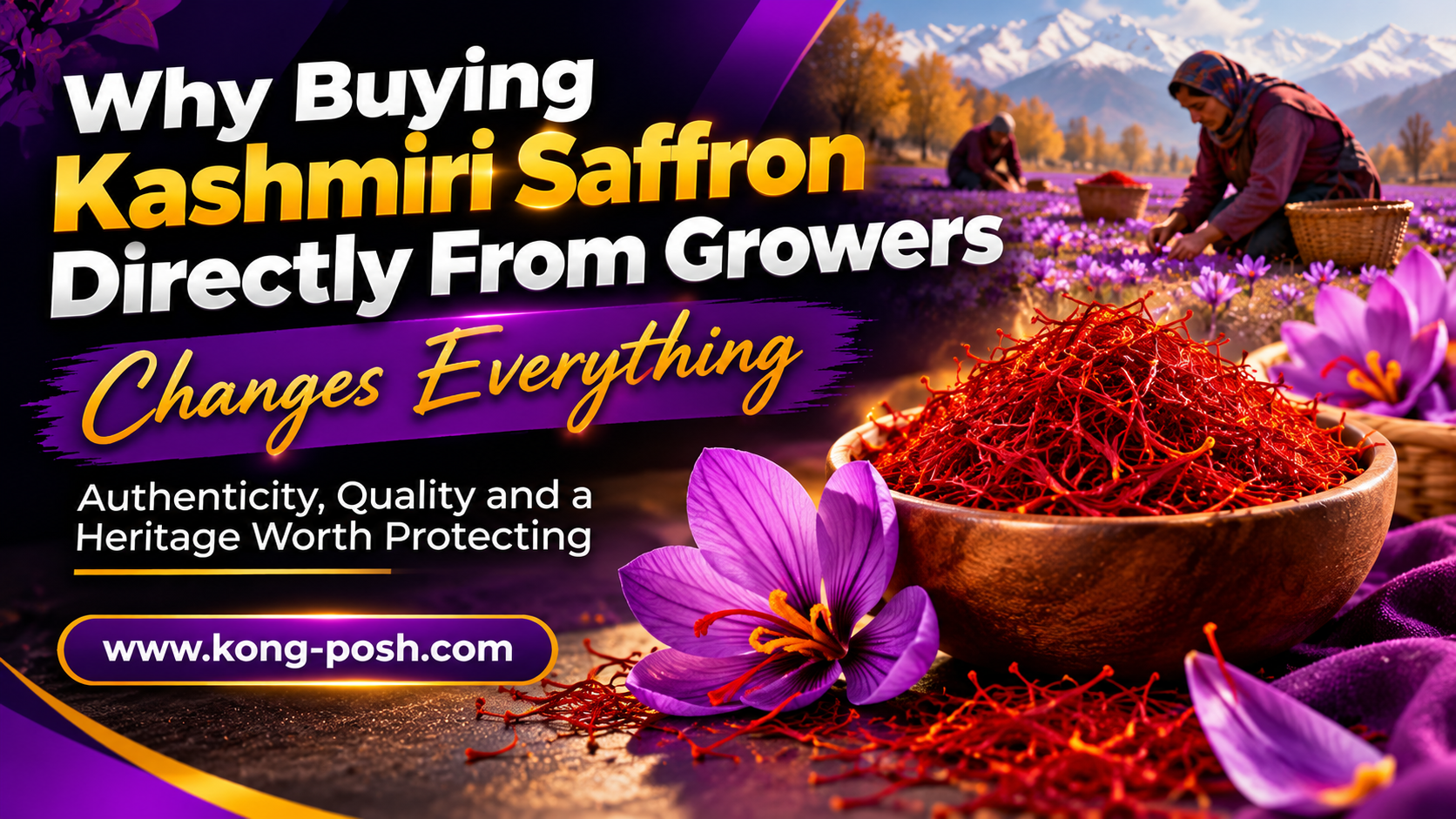
The difference between buying saffron and knowing your saffron begins with its source. Saffron is one of the world’s most valuable spices, yet many customers face the same uncertainty when purchasing it: Where did it come from? Is it authentic? How was it handled before reaching the kitchen? At Saffron Cottage, we believe customers deserve more than a small container of red threads and a premium price tag. We are the growers of finest Kashmiri saffron, harvesting from 7th generations. Our heritage connects us with the people, traditions and agricultural knowledge behind this extraordinary spice. Buying directly from growers can help customers understand the product’s origin, ask meaningful questions about its quality, and make a more informed purchasing decision. In a market where appearances can be misleading, knowing the source can make all the difference.
1. Know Where Your Saffron Comes From
When you buy saffron from an unknown seller, the journey between cultivation and your kitchen may be difficult to trace. A product can pass through multiple traders, wholesalers and retailers before it reaches you, making it harder to understand its origins. Buying directly from a grower can shorten that journey and give you a clearer connection to the source. For customers who value authentic Kashmiri saffron, origin is more than a detail on a label; it is an important part of the purchasing decision. At Saffron Cottage, our seventh-generation growing heritage is central to our identity. We want customers to appreciate not only the spice itself but also the agricultural tradition behind it. When choosing a supplier, look for clear information about the saffron’s origin, product handling and available quality documentation.
2. Make a More Informed Choice About Authenticity
Saffron’s high value makes authenticity an important concern for buyers. Poor-quality products may contain foreign plant material, added colouring or other adulterants, while genuine saffron can also vary in quality depending on its origin, processing, storage and handling. Buying directly from a grower may make it easier to ask questions about these factors before purchasing. However, direct sourcing alone is not proof of authenticity. A responsible seller should be willing to explain what they know about the product and provide appropriate supporting information when available. Customers can also look for credible testing, transparent labelling and consistent product details. At Saffron Cottage, our focus is on helping customers understand what they are buying rather than asking them to rely on attractive packaging or impressive promises. Confidence begins when product information is clear and verifiable.
3. Understand What Makes Quality Saffron Valuable
Premium saffron is not valuable simply because it is rare or expensive. Producing it requires careful work, from harvesting the delicate flowers to separating the red stigmas and handling them appropriately. These labour-intensive steps help explain why genuine saffron commands a higher price than many other spices. Quality can be assessed through several factors, including aroma, colour characteristics, moisture, purity and chemical composition. Laboratory testing using recognised methods can provide additional information about important quality parameters, including colouring strength, aroma-related characteristics and flavour-related compounds. Buying from a knowledgeable grower gives you an opportunity to ask how the product is produced and assessed. At Saffron Cottage, we want customers to see the value behind the saffron they purchase. Understanding quality helps you make a better decision than choosing solely by price or appearance.
4. Connect With Generations of Growing Heritage
Every agricultural product carries a story, but saffron has a particularly delicate journey from flower to finished spice. The flowers must be harvested at the appropriate time, and their precious stigmas must be separated with care. This work requires patience, attention and practical knowledge. Saffron Cottage’s seventh-generation growing heritage reflects our connection to that tradition. For us, saffron is not simply another product to place on a shelf. It represents an agricultural legacy that deserves to be understood and respected. When customers choose a grower with a genuine connection to cultivation, they can learn more about the people and practices behind the spice. Heritage alone does not guarantee a particular grade or quality, but it provides a meaningful starting point for a relationship built on knowledge, transparency and accountability.
5. Get Better Answers Before You Buy
A good purchasing experience should leave you better informed, not more confused. How much saffron should you buy? How should you store it? What should genuine saffron smell like? How can you use it without wasting those valuable threads? These are reasonable questions, especially for first-time buyers. Buying directly from a grower can create an opportunity to discuss the product with someone who understands its source and handling. A trustworthy seller should answer clearly, avoid exaggerated claims and acknowledge what they cannot verify. At Saffron Cottage, we believe informed customers are more confident customers. Whether you are buying saffron for everyday cooking, traditional recipes, special occasions or a thoughtful gift, useful guidance can help you choose an appropriate quantity and get more enjoyment from your purchase.
6. Understand What You Are Paying For
The cheapest saffron is not always the most economical choice. If a product contains adulterants, has poor aroma or fails to deliver the characteristics you expect, a low price may not represent genuine value. At the same time, a high price does not automatically prove superior quality. The sensible approach is to compare the information behind the price: origin, purity, grade claims, packaging, freshness, storage recommendations and supporting quality evidence. Buying directly from growers may reduce some intermediary costs, but the final price still depends on production expenses, processing, quality and distribution. Saffron Cottage encourages customers to look beyond a price tag and consider the complete product. When you understand what you are purchasing, you can compare suppliers fairly and choose saffron that fits your needs, expectations and budget.
7. Protect the Aroma and Quality After Purchase
Even authentic, high-quality saffron can lose some of its desirable characteristics if it is stored carelessly. Exposure to moisture, direct sunlight, excessive heat and air can affect its aroma and quality over time. Once your saffron arrives, keep it in a clean, dry, airtight container away from direct light and heat. Avoid leaving the container open for extended periods, particularly in a warm or humid kitchen. Buying from a supplier who understands proper packaging and handling can help you ask the right questions about storage and product care. These simple habits are particularly useful when purchasing premium Kashmiri saffron because every thread represents a product that requires careful cultivation and processing. The goal is straightforward: preserve the quality of your saffron so you can enjoy its distinctive aroma, colour and flavour for as long as appropriate.
8. Bring Authentic Saffron Into Your Everyday Kitchen
Saffron does not need to be reserved for weddings, festivals or expensive restaurant dishes. A small amount can add a distinctive aroma, golden colour and delicate flavour to rice, milk, desserts, soups and traditional recipes. Many cooks gently infuse saffron threads in a little warm water or milk before adding the infusion to a dish. This helps distribute the colour and flavour more evenly. Kashmiri saffron is especially appealing to people who appreciate ingredients with a distinctive culinary identity and a rich cultural history. Buying from a knowledgeable supplier can help beginners understand how to use the spice without adding more than a recipe requires. At Saffron Cottage, we want saffron to become an ingredient customers understand and enjoy, whether they are preparing a family recipe, exploring a new dish or creating something special for guests.
9. Choose a Supplier That Values Transparency
A supplier’s credibility should rest on more than attractive photographs and persuasive marketing. Look for clear contact information, honest product descriptions, realistic claims and a willingness to answer questions about origin and quality. If a seller advertises a particular grade or certification, ask what supports that claim. If the product is described as laboratory-tested, ask whether the relevant report is available. These details matter because consumers deserve to know what they are purchasing. Buying directly from growers can provide a more personal buying experience, but customers should still assess the supplier carefully. At Saffron Cottage, our growing heritage is part of our story, and we believe it should be accompanied by clear communication and responsible product information. Trust is not created by a single statement. It develops through consistent service, transparent answers and a product that meets the expectations set before purchase.
10. Support the People Behind the Product
Behind every carefully produced agricultural ingredient are people whose work makes it possible. Choosing a grower-connected supplier can help customers develop a closer understanding of the labour, seasonal challenges and knowledge involved in producing saffron. The exact economic benefit to growers depends on how the business operates, its supply arrangements and the price paid across the supply chain, so direct purchasing should not automatically be treated as proof that every transaction benefits farmers equally. Nevertheless, transparent sourcing can make agricultural production more visible and encourage customers to ask better questions about where their food comes from. Saffron Cottage’s seventh-generation heritage reflects the importance of preserving growing knowledge and respecting the work behind the spice. When customers take an interest in origin and production, they help create a marketplace in which transparency and responsible sourcing have greater value.
11. Choose Saffron With a Story, a Source and a Standard
The next time you purchase saffron, look beyond the container. Ask where it comes from, how its quality is assessed, how it has been handled and whether the seller can support the claims made about it. These questions are especially important when buying premium Kashmiri saffron, where authenticity and quality matter as much as appearance. Buying directly from a grower can offer a clearer connection to the product’s origin, more opportunities to ask questions and a better understanding of the work behind each thread. At Saffron Cottage, we are proud of our seventh-generation growing heritage and our commitment to bringing Kashmiri saffron to customers who value its distinctive character. If you are looking for authentic saffron for your kitchen, start with a supplier who respects the product enough to tell you about it honestly. Explore Saffron Cottage, discover the value of knowing your source, and make your next saffron purchase a more informed one.