
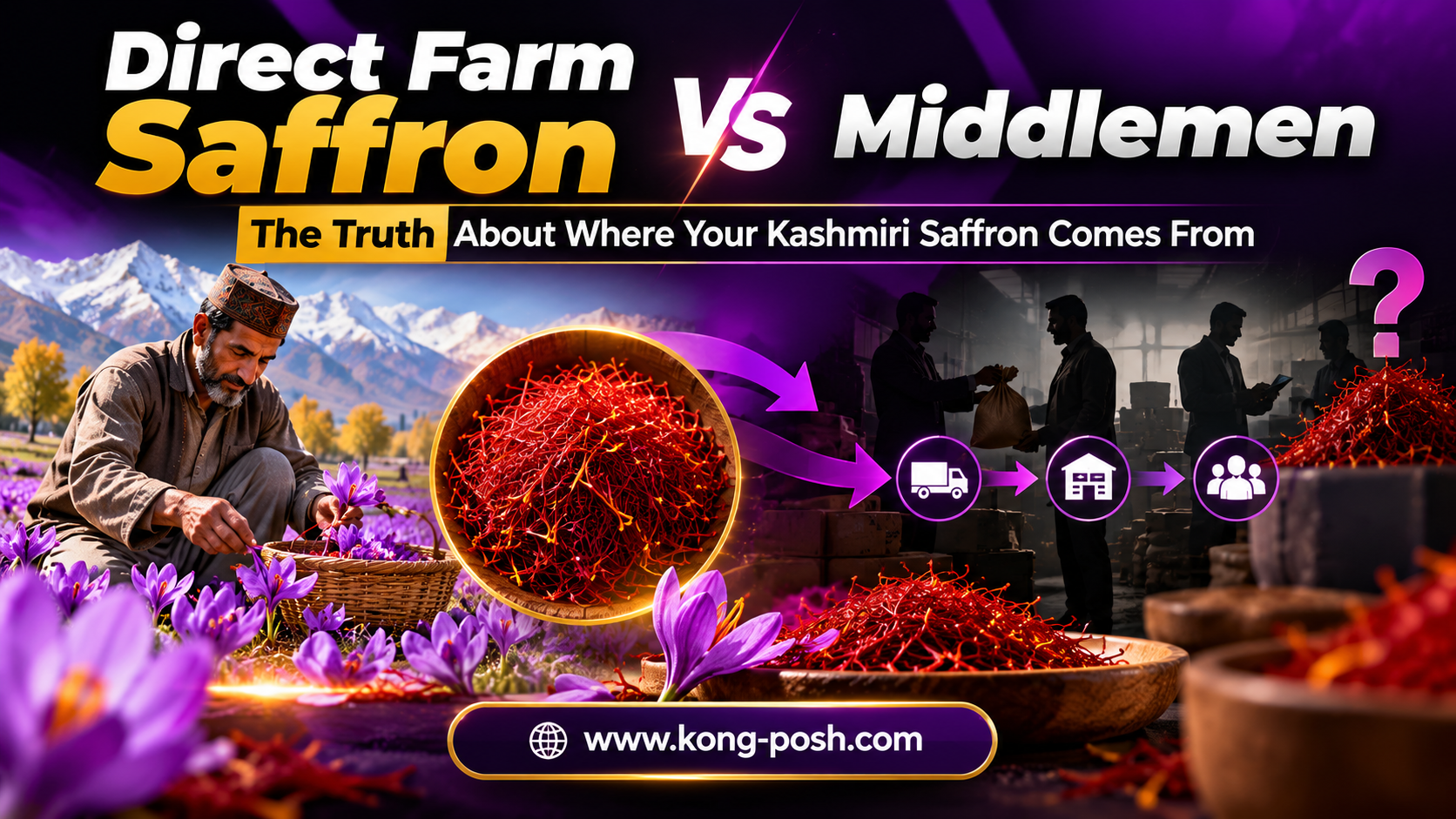
1. The Journey of Saffron Matters More Than You Think
A tiny pinch of saffron can transform a glass of milk, elevate a traditional dessert or bring extraordinary colour and aroma to an ordinary meal. Yet before those delicate red threads reach your kitchen, they may pass through several hands, trading points and distribution networks. Every step can affect how easily a buyer verifies the product’s origin, understands its quality and evaluates its price. This is why the difference between direct farm saffron and saffron purchased through multiple intermediaries deserves closer attention. At Saffron Cottage, our story begins with a deep connection to Kashmiri saffron cultivation. We are the growers of the finest Kashmiri saffron, harvesting from seven generations. Our heritage is central to our identity, and we believe customers deserve to know more about the saffron they bring into their homes. Buying saffron should not be an exercise in guesswork. It should begin with trust, transparency and a clear understanding of where the product comes from.
2. What Is Direct Farm Saffron?
Direct farm saffron refers to saffron sold through a sourcing model that connects the grower or farm directly with the customer, with fewer independent intermediaries involved. Depending on the business, the grower may cultivate the saffron, oversee harvesting, coordinate processing and packaging, or work with trusted partners to bring the finished product to market. The important distinction is the connection between the source and the buyer. When growers are directly involved in selling their saffron, customers may have a clearer route to ask questions about cultivation, harvest practices, origin and handling. They can also learn more about the people and agricultural traditions behind the product. At Saffron Cottage, our seventh-generation growing heritage gives customers a meaningful starting point for understanding our connection to Kashmiri saffron. We believe the story behind a product should be supported by clear information, not simply attractive packaging or promises that sound too good to be true.
3. How Middlemen Influence the Saffron Supply Chain
Middlemen are businesses or individuals who help move saffron from growers to customers. They can include collectors, wholesalers, distributors, importers and retailers. Their involvement is not automatically a disadvantage. In many cases, intermediaries provide valuable services such as transportation, quality control, storage, financing, packaging and access to international markets. Without them, some small growers might struggle to reach customers in distant countries. However, every additional transaction can introduce another layer of cost and make the original source more difficult for the final buyer to identify. Information about the harvest, handling and product history may not always travel with the saffron. This is where customers should pay attention. The real issue is not whether a seller uses intermediaries; it is whether that seller can explain the product’s origin, demonstrate appropriate quality controls and provide reliable information. A transparent supply chain matters more than a simple label claiming that a product is direct from the farm.
4. Direct Farm Saffron vs. Middlemen: What Is the Real Difference?
The biggest differences usually involve traceability, communication, pricing structure and the buyer’s access to information. With a genuine direct-from-grower model, customers may have a more direct relationship with the people responsible for producing or sourcing their saffron. They can ask about its Kashmiri origin, harvesting traditions, product handling and quality assessment. In a longer supply chain, the retailer may have less first-hand knowledge of those details, although reputable distributors can still maintain excellent records and product standards. Price is another consideration. Fewer intermediaries may reduce certain markups, but direct sourcing does not guarantee the lowest price. Harvest costs, labour, packaging, transportation, testing and import requirements all contribute to the final amount. The smartest customer compares more than the price per gram. They consider authenticity, origin, available evidence, seller accountability and the information provided before purchasing. At Saffron Cottage, we encourage buyers to look beyond marketing claims and understand what they are paying for.
5. Why Kashmiri Saffron Deserves Careful Sourcing
Kashmiri saffron is associated with a distinctive agricultural heritage and growing conditions that shape its reputation in the international spice market. Producing saffron requires considerable care. The flowers are delicate, harvesting is seasonal, and the valuable red stigmas must be separated and handled appropriately. The finished product’s characteristics can be influenced by harvesting, drying, storage and subsequent handling. That is why origin and product quality should be considered together. A seller who understands the product should be able to explain its sourcing and provide relevant information about its characteristics and handling. Buyers can also look for credible documentation, appropriate quality testing and clear product descriptions. Saffron Cottage’s connection to generations of Kashmiri cultivation is an important part of our brand identity. We want customers to appreciate the agricultural knowledge behind saffron while making informed purchasing decisions. Heritage gives a product a story, but responsible sourcing and transparent information help customers evaluate that story with confidence.
6. Is Direct Farm Saffron Cheaper Than Saffron From Middlemen?
Direct farm saffron can sometimes offer competitive pricing because the supply chain involves fewer independent sellers. However, a lower number of intermediaries does not automatically mean a lower final price. Growing, harvesting, separating, drying, grading, packaging and transporting saffron all require time, skill and resources. Genuine saffron is labour-intensive to produce, and unusually low prices should encourage buyers to investigate rather than immediately celebrate a bargain. Customers should compare the price per gram, the stated origin, the product description, shipping costs and the seller’s willingness to answer questions. They should also remember that colour, aroma and appearance can provide useful clues but cannot independently prove authenticity. Where available, credible laboratory analysis and traceability documentation offer additional assurance. For customers considering Saffron Cottage, the objective is to make an informed choice about premium Kashmiri saffron, understand its provenance and evaluate its value fairly. A sensible purchase is not necessarily the cheapest one; it is the one that offers confidence in what you receive.
7. How to Identify a Trustworthy Direct Saffron Seller
Before purchasing saffron, take a moment to investigate the business behind the product. Start with the stated country and region of origin. Does the seller explain where the saffron comes from, or does the product description rely on vague phrases such as premium quality and natural purity? Look for a clear business identity, accessible contact information, transparent pricing and realistic product descriptions. Ask whether the seller can provide information about the growing source, harvest, storage and handling. If authenticity or purity is particularly important to you, enquire about relevant quality-testing reports and what those reports actually establish. A reputable seller should welcome reasonable questions rather than pressure you into purchasing immediately. Be cautious of guaranteed medical benefits, impossible discounts and claims that cannot be substantiated. Direct sourcing is valuable when it creates accountability and makes product information easier to verify. It should never be treated as an automatic guarantee of purity. The strongest purchasing decision combines a credible seller, transparent sourcing and appropriate evidence of quality.
8. Why Saffron Cottage’s Seventh-Generation Heritage Matters
At Saffron Cottage, our identity is connected to a tradition that extends across seven generations of saffron growing. This heritage represents our connection to the agricultural knowledge and careful practices associated with Kashmiri saffron. For us, saffron is more than a product measured in grams. It is the result of a delicate growing and harvesting process that deserves appreciation and respect. We want customers to understand that story before making a purchase, whether they are discovering saffron for the first time or already use it in their everyday cooking. Our approach centres on connecting people with Kashmiri saffron while encouraging informed decisions about origin, product quality and value. We also recognise that trust is built through more than a family story. Clear communication, accurate product descriptions, reliable service and appropriate evidence all matter. Our seventh-generation heritage gives Saffron Cottage a meaningful identity, and our responsibility is to ensure the customer experience reflects the care and integrity that this identity represents.
9. Why Direct Sourcing Matters for International Customers
When saffron travels across borders, customers may have fewer opportunities to understand its origin or speak directly with the people behind the product. This can be particularly important for international buyers who are comparing suppliers online. A well-presented direct sourcing model can help bridge that distance by making information more accessible and giving customers a clear point of contact. Buyers in Malaysia and other international markets should pay attention to the stated origin of the saffron, the seller’s business details, delivery arrangements, packaging and any applicable import requirements. They should also check whether the seller can explain how the saffron is protected during storage and transportation. For restaurants, food businesses, specialty retailers and individual consumers, reliable communication can make the purchasing process easier. Saffron Cottage aims to make Kashmiri saffron more accessible to customers who value its heritage and culinary character. Our goal is to help buyers make an informed decision based on product information and confidence in the seller, rather than relying on price or promotional language alone.
10. The Questions Every Saffron Buyer Should Ask Before Purchasing
Before placing an order, ask five simple questions. First, where was the saffron grown, and can the seller explain its origin? Second, who is responsible for sourcing and handling the product? Third, what information or testing is available to support claims about purity and quality? Fourth, how has the saffron been packaged and stored to help preserve its characteristics? Finally, what support can the seller provide if the product received does not match its description? These questions are useful whether you are buying directly from a grower, through an established distributor or from a local retailer. They shift the conversation away from unsupported promises and towards information that helps customers compare products fairly. If a seller claims to work directly with growers, it is reasonable to ask what that relationship involves. If a seller promotes Kashmiri origin, it is reasonable to ask how that origin is established. Good businesses understand that informed customers are not difficult customers. They are customers who know what they value and want to make the right decision.
11. Choose Saffron With a Story, a Source and a Standard
The difference between direct farm saffron and saffron sold through middlemen is ultimately about the supply chain, the information available to customers and the accountability of the seller. Intermediaries can play a valuable role, but a longer supply chain may make it harder for buyers to understand the original source. Direct sourcing can make that connection clearer when it is supported by transparent practices and reliable product information. For Saffron Cottage, our seventh-generation Kashmiri saffron-growing heritage is at the heart of our story. We believe customers deserve more than a jar of red threads and a premium-sounding label. They deserve to understand what they are buying, where it comes from and why quality matters. Whether you are exploring saffron for the first time or looking for a trusted source for your kitchen, make origin, transparency and responsible sourcing part of your decision. Discover Saffron Cottage and explore the world of Kashmiri saffron through the experience of a brand rooted in generations of growing heritage. When you choose saffron with care, you honour not only the ingredient but also the people and agricultural traditions behind it.