
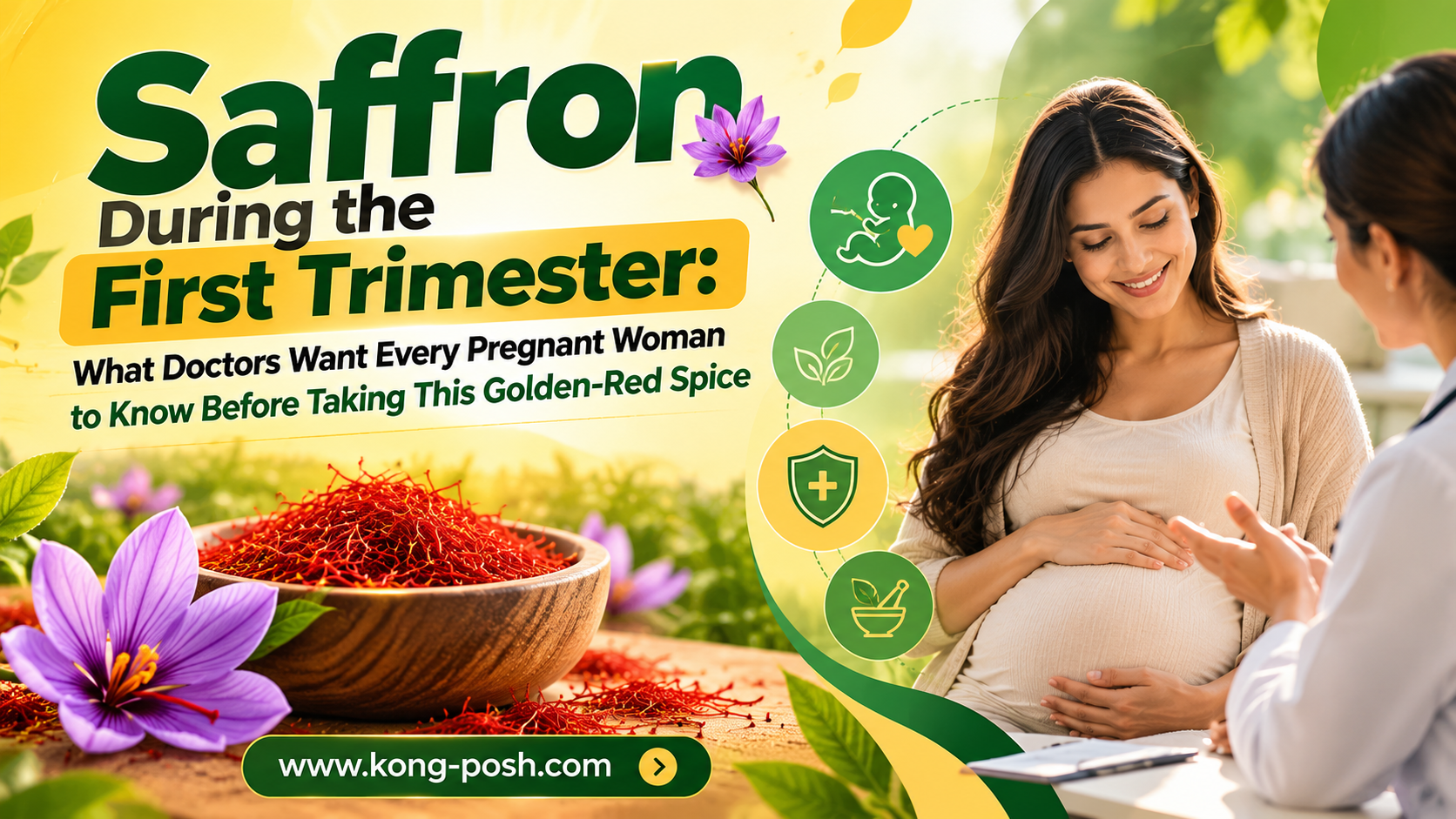
The first trimester is not the time to experiment with traditional remedies. Here is what medical evidence says about Kashmiri saffron, pregnancy safety, possible risks and the difference between culinary use and concentrated supplements.
1. The First Trimester Calls for Careful Choices
The first 12 weeks of pregnancy bring significant changes as the embryo develops and essential organs begin forming. During this period, many women become more conscious of what they eat, drink and apply to their bodies. Advice from mothers, grandmothers and relatives often becomes part of that journey, especially in families where saffron has been valued for generations. In Kashmiri and South Asian traditions, a few strands of saffron in milk are familiar to many households. But a traditional practice and a medically established safety recommendation are not the same thing. Doctors assess pregnancy products by examining available safety evidence, the amount consumed, the preparation used and the stage of pregnancy. For saffron during the first trimester, the evidence remains limited, so caution is appropriate.
2. What Do Doctors Say About Saffron During Early Pregnancy?
The central medical concern is that saffron has not been studied sufficiently to establish a safe supplemental dose during the first trimester. An integrative review published in 2026 examined saffron use during pregnancy and childbirth and concluded that the evidence on maternal and fetal safety remains limited and inconclusive. The review also discussed research suggesting that higher exposure may stimulate the uterus and potentially increase pregnancy risks. This does not mean that every exposure to saffron causes harm, nor does it establish that a tiny amount in a meal will cause a miscarriage. It means there is not enough reliable evidence to recommend concentrated saffron preparations as safe during early pregnancy. The prudent approach is to avoid saffron supplements, medicinal preparations and deliberate high-dose consumption unless an obstetric clinician specifically advises otherwise. Source: Journal of Evidence-Based Integrative Medicine, 2026.
3. Is Saffron Milk Safe During the First Trimester?
Saffron milk is a familiar traditional drink, often associated with comfort, nourishment and family care. However, adding saffron to milk does not remove the need to consider pregnancy safety. A few strands used occasionally to flavour a recipe are different from a strong saffron infusion consumed every day for a supposed medicinal effect. The available evidence does not establish a precise safe amount for saffron during the first trimester, so pregnant women should ask their obstetrician about intentional consumption, particularly if they plan to drink it regularly. Avoid concentrated saffron milk, saffron extracts and high-dose preparations during early pregnancy. If you have already consumed a small amount in ordinary food, do not automatically assume that harm has occurred. Tell your healthcare professional what you consumed and how much, especially if it was a concentrated preparation.
4. Can Saffron Cause Miscarriage?
This is one of the most important questions surrounding saffron and pregnancy. Research has raised concerns about high saffron exposure, including evidence of increased miscarriage rates among women exposed to high levels while harvesting saffron. Experimental research has also raised concerns about uterine stimulation. These findings deserve attention, but they must be interpreted carefully: occupational exposure, concentrated preparations and ordinary culinary quantities are not interchangeable. They do not prove that every small dietary exposure causes miscarriage. Equally, traditional use cannot establish that a particular amount is safe. Because the first trimester is a critical stage of development and reliable dose-specific safety data are lacking, pregnant women should avoid high-dose saffron and medicinal use. If you experience vaginal bleeding, severe abdominal pain, fainting or significant dizziness during pregnancy, seek prompt medical assessment rather than assuming saffron is responsible.
5. Does Saffron Improve a Baby’s Complexion?
In some South Asian families, expectant mothers are encouraged to consume saffron because of the belief that it will give the baby a fairer complexion. The belief is culturally familiar, but there is no reliable clinical evidence that eating saffron changes a baby’s genetically determined skin colour. A baby’s skin pigmentation is influenced primarily by genetics and the biology of melanin production, not by whether a mother drinks saffron milk. This distinction matters because pregnant women already face considerable pressure to follow advice intended to produce a particular outcome for their babies. Saffron can be appreciated for its aroma, culinary value and cultural significance without attaching promises to fetal appearance. At Saffron Cottage, we believe that honest information respects both the heritage of Kashmiri saffron and the families who choose to learn about it.
6. What About Crocin, Crocetin and Saffron’s Health Benefits?
Saffron contains naturally occurring compounds, including crocin, crocetin and safranal, that researchers have investigated for antioxidant and other biological activities. These studies help explain why saffron attracts interest in nutrition and wellness research. However, evidence of biological activity in laboratory experiments or non-pregnant adults does not establish that saffron supplements are safe or beneficial during the first trimester. Pregnancy changes how clinicians evaluate potential benefits and risks because an exposure may affect both the mother and the developing baby. Saffron should not be promoted as a way to improve fetal development, prevent pregnancy complications or replace prenatal supplements. Pregnant women should follow evidence-based antenatal guidance, including recommendations for folic acid and other nutrients appropriate to their individual circumstances. A qualified clinician can advise which products are suitable for their pregnancy.
7. Is Natural Saffron Safer Than Other Saffron Products?
Natural does not automatically mean safe during pregnancy. Genuine Kashmiri saffron and other authentic saffron varieties may differ in origin, aroma, quality and chemical composition, but authenticity alone cannot establish pregnancy safety. Saffron extracts, capsules, powders and strongly concentrated preparations can also deliver different exposures from those associated with occasional culinary use. Product quality matters because adulterated or poorly controlled products may contain unwanted substances, but even a pure, traceable product is not automatically appropriate for a pregnant woman. The UK National Health Service advises pregnant women to consult a doctor, midwife or pharmacist before using herbal remedies and notes that not all natural remedies are safe during pregnancy. For that reason, Saffron Cottage encourages informed purchasing and responsible product information rather than suggesting that premium quality removes medical concerns.
8. What If You Already Ate Saffron Before Knowing You Were Pregnant?
Discovering a pregnancy can make earlier food choices feel worrying, particularly when you encounter conflicting advice online. If you previously ate a dish containing a small amount of saffron, there is no reason to assume automatically that your baby has been harmed. The appropriate response depends on the amount, frequency, preparation and your individual medical circumstances. If you consumed saffron capsules, concentrated extracts, large quantities or a preparation intended to produce medicinal effects, contact your obstetrician or pharmacist and explain the exposure. Do not take more while waiting for advice. If you experience bleeding, severe pain or other concerning symptoms, obtain medical attention promptly. Healthcare professionals can assess your circumstances without relying on assumptions or frightening generalisations. The purpose of pregnancy safety advice is to reduce avoidable risks, not to make women feel guilty about something they consumed before understanding the evidence.
9. What Should Pregnant Women Use Instead?
Rather than relying on saffron as a pregnancy remedy, focus on a varied diet and the supplements recommended by your antenatal care provider. Depending on your circumstances and local guidance, this may include folic acid, vitamin D and other nutrients when indicated. Eat a range of suitable vegetables, fruits, whole grains and protein-rich foods, and follow established food-safety advice. Do not replace prescribed medication or recommended prenatal supplements with saffron, herbal mixtures or other traditional preparations. If you are struggling with nausea, poor appetite, fatigue or anxiety, tell your healthcare professional. These symptoms are common in pregnancy, but appropriate advice can help you manage them safely. A doctor or pharmacist can also review herbal products and supplements you are considering. Good pregnancy care is not about finding one extraordinary ingredient; it is about making informed choices that support maternal health and fetal development.
10. Saffron Cottage: Seven Generations of Heritage, With Honesty at the Heart of Our Story
At Saffron Cottage, Kashmiri saffron represents a connection to cultivation, craftsmanship and generations of agricultural knowledge. Our brand story is rooted in the belief that genuine saffron deserves to be understood for what it is: a distinctive, valuable spice with a rich cultural history. We are the growers of finest Kashmiri saffron, harvesting from 7th generations. That heritage is something to share proudly, but it should never be used to make medical promises that research has not established. We want consumers to understand the difference between authentic saffron, traditional beliefs and scientifically supported health information. For expectant mothers, this means prioritising medical advice over marketing claims, avoiding concentrated saffron products unless specifically advised by a qualified clinician, and making decisions that reflect the uncertainties surrounding early-pregnancy safety. Trust grows when a brand tells the truth, including when caution is the most responsible recommendation.
11. The Final Word: Protect Your Pregnancy With Evidence-Based Choices
Saffron has a remarkable place in food culture and traditional practices, but the first trimester requires particular care with herbal remedies and concentrated supplements. Current evidence does not establish a safe medicinal dose of saffron during early pregnancy, and research raises concerns about high exposure and possible uterine effects. A small culinary exposure is not the same as taking a concentrated supplement, and neither should be discussed without considering the circumstances. If you are pregnant or planning a pregnancy, consult your obstetrician before using saffron for a health purpose. If you have already consumed it, explain the amount and preparation rather than assuming the worst. At Saffron Cottage, our commitment to seventh-generation Kashmiri saffron growers includes a commitment to responsible information. Authenticity matters, heritage matters, and the wellbeing of mothers and babies matters most. Choose saffron for its genuine culinary qualities, and let qualified healthcare professionals guide decisions about its use during pregnancy.
Medical disclaimer: This article is for general educational purposes and does not replace individual medical advice. Pregnant women should consult a qualified healthcare professional before using saffron medicinally or taking saffron supplements.