
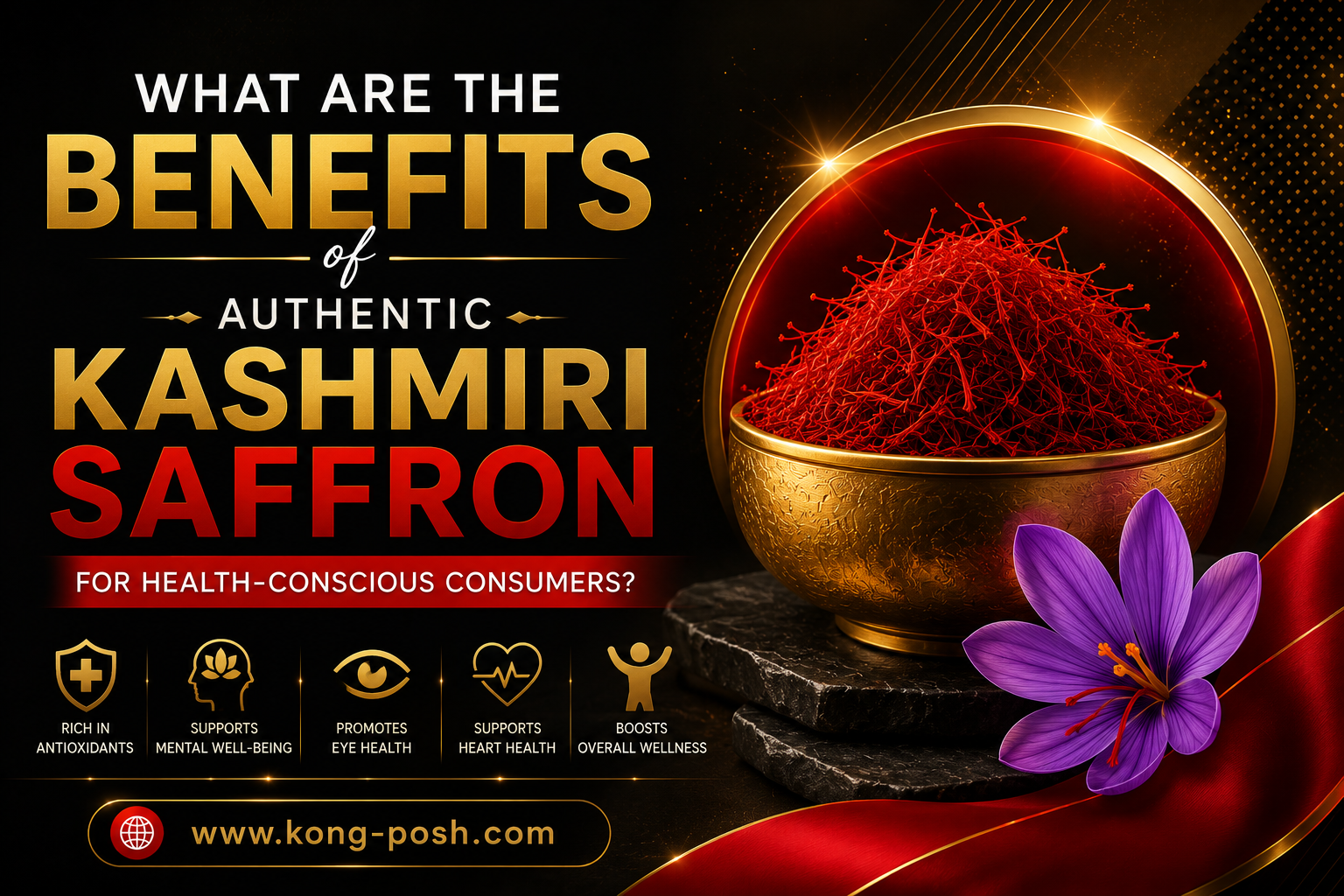
In a world where consumers are reading labels more carefully, questioning product origins, and looking for simpler choices, one ancient spice is gaining renewed attention: Kashmiri saffron.
But there is an important distinction that health-conscious consumers cannot afford to ignore. Not every product sold as “Kashmiri saffron” offers the same quality, authenticity, freshness, or traceability.
For people who care about what goes into their food, wellness routines, beauty rituals, and everyday lifestyle, the real question is no longer simply, “What is saffron good for?”
The better question is:
How can you identify authentic Kashmiri saffron and make it part of a thoughtful, quality-focused lifestyle?
That question matters because saffron is one of the world’s most valuable spices, and its premium price creates an obvious temptation for low-quality products, blends, old stock, misleading labeling, and imitation products.
At Saffron Cottage, our story begins much earlier than the moment a customer opens a saffron container.
We are the growers of FINEST KASHMIRI SAFFRON, harvesting from 7th generations.
That heritage is not simply a marketing sentence. It represents a relationship with saffron that begins with cultivation, continues through harvesting and handling, and ultimately reaches the consumer who wants something genuine.
Why authentic Kashmiri saffron matters more than ever
The modern health-conscious consumer is becoming increasingly selective.
People are looking at ingredient lists. They are asking where food comes from. They want fewer unnecessary additives. They are becoming more interested in traditional ingredients and natural food cultures while still expecting modern standards of quality and transparency.
Saffron fits naturally into this conversation.
It has been valued for centuries in South Asian, Persian, Middle Eastern, Mediterranean, and other culinary traditions. Today, saffron is also widely discussed in research and wellness conversations because of its naturally occurring compounds, including crocin, crocetin, picrocrocin, and safranal.
But there is a major difference between talking about saffron and choosing good saffron.
A beautiful red-colored product does not automatically mean premium saffron.
A low price does not automatically mean a good deal.
And a label that says “Kashmiri saffron” should not be the only reason you trust the product.
Authenticity, origin, freshness, handling, appearance, aroma, and responsible sourcing all deserve attention.
What makes Kashmiri saffron special?
Kashmir has a long-standing saffron-growing tradition, particularly associated with the Pampore region.
The saffron flower produces only a few delicate red stigmas, commonly called saffron threads. These threads must be carefully harvested and processed, which helps explain why genuine saffron is expensive compared with many other spices.
This is also why saffron quality is something consumers should understand before purchasing.
Premium saffron is not produced by simply growing a large quantity of flowers and putting the finished product into a jar.
It requires patience.
It requires careful harvesting.
It requires appropriate drying and storage.
And it requires protecting the delicate threads from moisture, contamination, excessive heat, and unnecessary exposure to light.
For consumers, this leads to one simple lesson:
The value of saffron begins long before it reaches your kitchen.
Authentic saffron versus cheap saffron: what should consumers look for?
This is where many buyers make a mistake.
They compare prices without comparing quality.
Imagine two products.
One costs significantly less but has weak aroma, inconsistent threads, excessive yellow material, powder, or questionable sourcing information.
Another costs more but offers carefully handled threads, recognizable aroma, stronger color characteristics, clear sourcing information, and a supplier willing to explain where the saffron comes from.
The cheaper product may appear to be the better bargain.
But if you need significantly more of it to achieve the culinary experience you expect, the calculation changes.
For health-conscious consumers, the decision should therefore go beyond price per gram.
Ask:
Where was the saffron grown?
Is the origin clearly stated?
Are you buying whole threads or powder?
How has it been stored?
Does the seller explain its sourcing?
Is the product fresh?
Does it have the characteristic aroma and appearance expected from saffron?
Can the seller provide meaningful information about quality and handling?
These questions are more useful than simply searching for the cheapest saffron online.
Why whole saffron threads are worth considering
If you are buying saffron for home use, whole threads can offer an important advantage: visual inspection.
With whole threads, you can see what you are purchasing.
Powdered saffron is much harder for an ordinary consumer to evaluate visually. It may still be genuine, but assessing purity becomes more difficult once the physical threads are no longer visible.
This is one reason premium saffron is often sold as threads.
Whole threads allow consumers to examine characteristics such as color, structure, dryness, aroma, and consistency.
That does not mean appearance alone can scientifically prove authenticity. Laboratory testing remains the stronger method for verifying specific quality parameters.
But for everyday purchasing, whole threads combined with trustworthy sourcing can give consumers more confidence.
The health conversation around saffron is changing
Saffron has moved beyond the traditional kitchen.
It is now frequently discussed in wellness, nutrition, beauty, and lifestyle conversations.
Research has investigated saffron and its constituents in several areas, including mood, oxidative stress, inflammation, and other health-related topics.
However, consumers should be careful with exaggerated claims.
Saffron is a spice, not a miracle cure.
It should not replace medical treatment, prescribed medication, a balanced diet, sleep, exercise, or professional healthcare.
The smarter approach is to view saffron as a traditional ingredient that can complement a healthy lifestyle.
That distinction matters.
Wellness should be built on evidence and consistency, not exaggerated promises.
Can saffron be part of a healthy daily routine?
For many adults, saffron can be incorporated into ordinary food and beverages in small culinary quantities.
You can infuse a few threads in warm water or milk.
You can add it to rice dishes.
You can use it in desserts.
You can incorporate it into traditional recipes.
You can combine it with nuts, milk, yogurt, or other foods.
The objective does not need to be complicated.
Instead of treating saffron as a mysterious “superfood,” think of it as a premium traditional spice that can bring distinctive aroma, color, and flavor to everyday food.
That approach is both realistic and sustainable.
The biggest mistake health-conscious consumers make
Ironically, people who care deeply about health sometimes focus so heavily on the ingredient itself that they forget about product quality.
They search:
“best saffron for health”
“pure Kashmiri saffron”
“authentic saffron online”
“best saffron brand”
“saffron benefits”
But the most important question may be:
Who is behind the saffron?
A trustworthy saffron supplier should be able to communicate clearly about origin, sourcing, cultivation, harvesting, processing, packaging, and storage.
When a company is proud of its agricultural heritage, it should not be difficult to explain the journey from field to customer.
That is the philosophy behind Saffron Cottage.
From seven generations to your kitchen
Saffron Cottage is built around a simple idea: quality should have a story.
We are the growers of FINEST KASHMIRI SAFFRON harvesting from 7th generations.
That connection to saffron cultivation gives our brand a different perspective.
We do not want customers to think of saffron as just another item in an online shopping cart.
We want them to understand what they are buying.
Why genuine saffron commands value.
Why origin matters.
Why freshness matters.
Why storage matters.
Why responsible consumption matters.
And why a premium ingredient deserves to be treated with respect.
When consumers understand the journey behind a product, they make better purchasing decisions.
How to choose authentic Kashmiri saffron online
Buying saffron online can be convenient, but convenience should never mean abandoning due diligence.
Before purchasing, use a simple evaluation process.
Start with origin
Look for clear information about where the saffron comes from.
If the seller cannot explain the origin of the saffron, consider that a warning sign.
Examine the threads
Premium saffron is generally sold as threads rather than an unexplained red powder.
Look closely at the physical product whenever images or samples are available.
Pay attention to aroma
Good saffron has a distinctive aroma. It should not smell overwhelmingly artificial, chemical, or perfumed.
Look beyond bright red color
Color alone cannot prove quality.
Consumers should not assume that the brightest-looking product is automatically the best.
Ask about storage
Saffron is sensitive to environmental conditions.
Proper storage helps protect its aroma and quality.
Investigate the seller
Look for a supplier with a transparent identity, clear product information, customer communication, and a genuine story behind the product.
Do not let price decide everything
Extremely cheap saffron deserves scrutiny.
So does a product making extraordinary health claims.
The best purchase is not necessarily the cheapest.
It is the one where quality, authenticity, transparency, and value make sense together.
Why saffron freshness deserves more attention
Freshness is an underrated part of the saffron conversation.
Saffron contains volatile compounds responsible for much of its distinctive aroma. Over time, poor storage can affect the sensory qualities consumers expect.
This is why packaging matters.
A good saffron product should be protected from moisture, excessive heat, and unnecessary exposure to light.
Once opened, consumers should also store saffron properly rather than leaving the container exposed in a warm kitchen.
A premium ingredient deserves premium storage.
Saffron and the modern clean-label consumer
Today’s consumer is increasingly interested in knowing what they are buying.
The broader food market is moving toward transparency, traceability, traditional ingredients, responsible sourcing, and authenticity.
Saffron sits directly inside that conversation.
Consumers are not simply buying flavor anymore.
They are buying provenance.
They are buying trust.
They are buying the story behind the ingredient.
They are buying confidence that the product they receive resembles what they thought they ordered.
That is why brands that can communicate clearly about their sourcing and product journey have an opportunity to stand apart.
Saffron for food, wellness and everyday living
One of the most appealing qualities of saffron is versatility.
A small amount can transform ordinary food into something memorable.
Think about warm saffron milk on a quiet evening.
Saffron-infused rice served with a family meal.
A traditional dessert elevated with saffron.
A warm beverage during a slow morning.
A festive recipe where saffron becomes part of the occasion.
These moments show why saffron has survived across generations.
It is not simply about health.
It is about food, culture, memory, aroma, hospitality, and tradition.
And that is something modern wellness trends sometimes forget.
A healthy lifestyle does not have to be joyless.
What about saffron supplements?
This is another area where consumers need to be careful.
Saffron is available as food, extracts, capsules, and supplements.
These products are not necessarily equivalent.
Concentrated extracts can deliver different amounts of active compounds than culinary saffron, and supplement quality can vary between manufacturers.
If you are considering saffron supplements for a specific health purpose, particularly if you take medication, are pregnant, breastfeeding, or have an existing health condition, speak with a qualified healthcare professional before using concentrated products.
For ordinary culinary use, saffron can remain what it has always been:
a remarkable spice used in food.
A smarter saffron-buying mindset
The future of food is not simply about finding “natural” products.
It is about becoming an informed consumer.
Natural does not automatically mean safe.
Traditional does not automatically mean scientifically proven for every health claim.
Premium does not automatically mean authentic.
And expensive does not automatically mean better.
The intelligent consumer asks questions.
That is exactly the mindset we encourage at Saffron Cottage.
We want customers to understand saffron rather than simply purchase saffron.
Because once you understand the difference between authentic saffron and questionable saffron, your buying decision changes forever.
Who should buy authentic Kashmiri saffron?
Authentic Kashmiri saffron is particularly relevant to consumers who care about premium ingredients, traditional foods, culinary experiences, food provenance, and thoughtful wellness choices.
Our audience includes:
Health-conscious adults looking for traditional ingredients to complement their lifestyle.
Home cooks who want premium saffron for rice, desserts, beverages, and special meals.
Families who value traditional food and cultural heritage.
Food enthusiasts interested in authentic Kashmiri ingredients.
Premium grocery shoppers who prioritize quality over the lowest price.
Consumers searching for authentic Kashmiri saffron online.
Gift buyers looking for a premium and meaningful food product.
Restaurants, chefs, caterers, and hospitality businesses seeking quality saffron for culinary applications.
People interested in understanding the difference between authentic saffron and low-quality alternatives.
If you fall into one of these groups, your next purchase should begin with a question about provenance, not price.
The urgency: don’t wait until after you buy to question quality
The saffron market is not something consumers should navigate blindly.
When you purchase a premium ingredient, you are trusting the supplier.
That trust should be earned.
Before you click “buy,” stop for a moment.
Read the product information.
Look at the saffron.
Check the origin.
Understand the seller.
Ask questions.
And make sure the product aligns with what you believe you are paying for.
Because once you understand saffron quality, you realize something important:
The cheapest saffron is not necessarily the most affordable saffron.
Quality determines value.
Why Saffron Cottage is building around heritage
Saffron Cottage represents more than a product listing.
It represents generations of connection with Kashmiri saffron.
We are the growers of FINEST KASHMIRI SAFFRON harvesting from 7th generations.
Our goal is to bring that heritage closer to consumers who appreciate authenticity, quality, and the story behind what they eat.
In an industry where products can look similar online, heritage creates context.
But heritage must also be supported by quality, transparency, responsible communication, and customer trust.
That is the standard we aim to build around Saffron Cottage.
The future of saffron is authenticity
The next generation of food consumers will ask more questions.
Where did it come from?
Who grew it?
How was it harvested?
How was it handled?
How was it stored?
What am I actually buying?
These questions are not trends that will disappear.
They are becoming part of how consumers evaluate premium food.
And saffron is perfectly positioned for this new era.
The future belongs to products that can combine tradition with transparency.
Heritage with responsible modern standards.
Authenticity with convenience.
Quality with trust.
That is where Saffron Cottage wants to stand.
Final thought: buy the story, but verify the substance
Authentic Kashmiri saffron is more than a luxury spice.
It is the result of careful cultivation, delicate harvesting, processing, preservation, and generations of knowledge.
For health-conscious consumers, the smartest approach is not to believe every saffron claim circulating online.
It is to become a better buyer.
Choose transparent suppliers.
Look for authentic threads.
Understand origin.
Store saffron correctly.
Use it thoughtfully.
And treat health claims with the same level of care you apply to the food itself.
At Saffron Cottage, our story begins with seven generations of Kashmiri saffron cultivation.
Now, we invite you to become part of that story.
If you are searching for authentic Kashmiri saffron, do not settle for a name on a label. Ask where it came from, understand its journey, and choose quality you can trust.
Discover the Finest Kashmiri Saffron from Saffron Cottage and bring generations of saffron-growing heritage into your kitchen.
Frequently asked questions
What is authentic Kashmiri saffron?
Authentic Kashmiri saffron refers to saffron originating from Kashmir and produced from the stigmas of Crocus sativus flowers. Buyers should look for clear sourcing and origin information rather than relying solely on labeling.
How can I identify genuine Kashmiri saffron?
Look for whole saffron threads, clear origin information, a characteristic aroma, appropriate packaging, and a transparent seller. For definitive authenticity and quality verification, laboratory testing is more reliable than visual inspection alone.
Is Kashmiri saffron good for health-conscious consumers?
Saffron contains naturally occurring compounds that have been studied for various potential health effects. However, saffron should be considered a food ingredient rather than a cure or replacement for medical treatment.
Can I consume saffron every day?
Small culinary amounts can be incorporated into food and beverages. Concentrated saffron supplements are different and should be approached more carefully, especially for people with medical conditions, those taking medications, and during pregnancy or breastfeeding.
Why is authentic saffron expensive?
Saffron is labor-intensive to produce because each flower produces only a small number of delicate stigmas that must be harvested and processed carefully.
Is Kashmiri saffron better than other saffron?
Different saffron-growing regions produce saffron with distinct characteristics. Rather than assuming that origin alone determines quality, consumers should consider authenticity, grading, freshness, cultivation practices, handling, testing, and storage.
How should saffron be stored?
Keep saffron in a well-sealed container away from moisture, excessive heat, and direct light. Proper storage helps protect its sensory qualities.
Where can I buy authentic Kashmiri saffron online?
Choose a supplier that clearly communicates its origin, sourcing, product characteristics, handling, and brand identity. Saffron Cottage offers Finest Kashmiri Saffron based on a seven-generation growing heritage.