
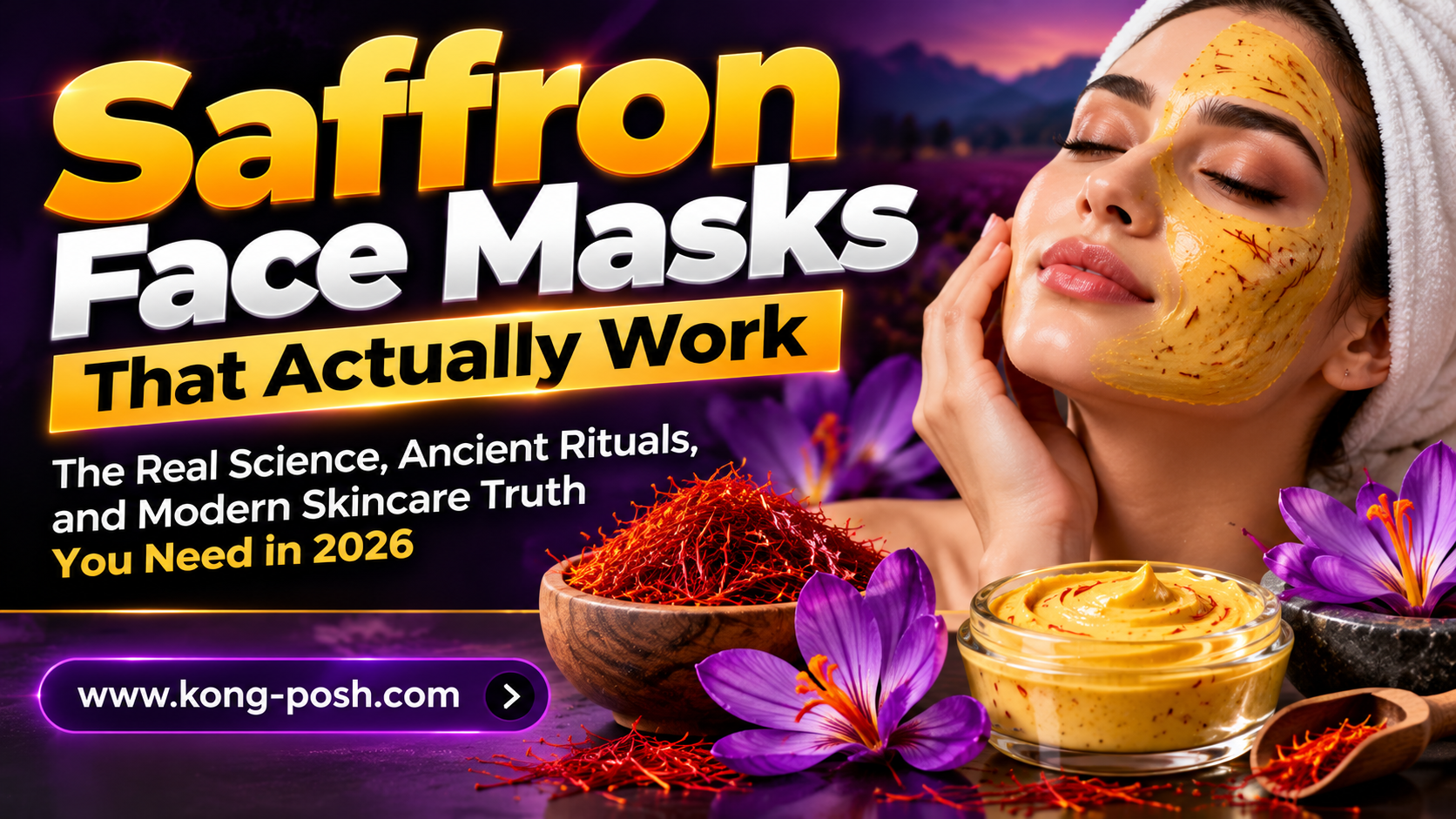
Introduction: Why Saffron Still Rules Modern Skincare
Skincare trends change every year, but saffron never disappears.
From ancient Kashmiri beauty rituals to modern luxury skincare labs, saffron continues to be one of the most searched natural ingredients for glowing skin, pigmentation repair, and anti-aging care.
But here’s the truth most people miss:
Not every saffron face mask works.
And not every “DIY recipe” gives real results.
The difference lies in purity, preparation, and consistency.
At Saffron Cottage, where saffron is cultivated through seven generations of Kashmiri farming tradition, we’ve seen one pattern again and again—real saffron works when used correctly, not randomly.
What Makes Saffron Effective for Skin?
Before going into masks, you need to understand why saffron is even used in skincare.
Saffron contains natural compounds such as crocin, crocetin, and safranal, which are known for:
- Brightening dull skin tone
- Reducing pigmentation and dark spots
- Calming inflammation
- Supporting skin repair and regeneration
- Providing antioxidant protection against environmental damage
This is why saffron is not just a “beauty ingredient”—it’s a skin recovery agent.
But there is a catch.
If saffron is low-quality or overused, it does almost nothing.
The Truth About Saffron Face Masks
Most online recipes fail because they ignore three things:
- Quality of saffron used
- Time required for infusion
- Skin type compatibility
A saffron mask is not instant magic. It works gradually, building results over time.
Now let’s get into masks that actually deliver visible improvement.
1. Classic Saffron Milk Face Mask (Glow & Softness)
This is the most traditional and effective saffron skincare method.
Ingredients:
- 4–6 strands of pure Kashmiri saffron
- 2 tablespoons raw milk
Method:
- Soak saffron in milk for 20–30 minutes
- Let it release full color and aroma
- Apply evenly on clean skin
- Leave for 15 minutes
- Rinse with lukewarm water
Results:
- Instant skin softness
- Natural glow
- Reduced dullness with regular use
This mask is still widely used in Kashmiri households because it works slowly but consistently.
2. Saffron & Honey Mask (Hydration + Acne Support)
If your skin is dry or acne-prone, this combination is powerful.
Ingredients:
- 3–5 saffron strands
- 1 teaspoon raw honey
- A few drops of warm water
Method:
- Soak saffron briefly
- Mix with honey
- Apply for 10–15 minutes
Results:
- Deep hydration
- Reduced redness
- Gentle antibacterial support
Honey amplifies saffron’s soothing effect, making it ideal for sensitive skin.
3. Saffron & Sandalwood Brightening Mask (Pigmentation Control)
This is one of the most searched natural remedies for uneven skin tone.
Ingredients:
- Saffron strands (soaked)
- 1 teaspoon sandalwood powder
- Rose water
Method:
- Mix all ingredients into a paste
- Apply for 15–20 minutes
- Wash off gently
Results:
- Reduced pigmentation over time
- Brighter skin tone
- Smoother texture
This mask is widely used in traditional South Asian skincare rituals.
4. Saffron & Yogurt Mask (Skin Repair Formula)
Best for tired, stressed, or uneven skin.
Ingredients:
- 4 saffron strands
- 2 tablespoons plain yogurt
Method:
- Soak saffron in yogurt for 15–20 minutes
- Apply and relax for 15 minutes
Results:
- Skin tightening effect
- Natural exfoliation
- Improved skin clarity
Yogurt contains lactic acid, which gently renews skin cells while saffron enhances brightness.
5. Saffron & Aloe Vera Mask (Modern Skin Recovery)
A trending combination in 2026 skincare routines.
Ingredients:
- Saffron infusion (soaked in water)
- 1 tablespoon fresh aloe vera gel
Method:
- Mix and apply evenly
- Leave for 15–20 minutes
Results:
- Calms irritated skin
- Supports healing of minor acne
- Refreshes skin instantly
This is becoming popular in clean beauty routines globally.
Why Most People Don’t See Results
Even the best saffron mask fails when:
- Fake or diluted saffron is used
- Masks are applied once and abandoned
- Ingredients are mixed incorrectly
- Expectations are unrealistic
Skincare is not a one-time event. It is a process.
How Often Should You Use Saffron Masks?
- Normal skin: 2 times per week
- Dry skin: 2–3 times per week
- Oily/acne-prone skin: 1–2 times per week
Consistency is more important than frequency.
The Bigger Truth: Why Origin Matters More Than Recipes
No matter how perfect your mask recipe is, it will fail without pure saffron.
This is where most skincare users are misled.
At Saffron Cottage, saffron is not sourced—it is grown, handpicked, and preserved through seven generations of Kashmiri farming expertise. That means:
- Higher crocin concentration
- Stronger aroma and color release
- Better skin absorption results
This is why origin directly impacts skincare outcomes.
Final Insight: Ancient Beauty Meets Modern Science
Saffron face masks are not a trend.
They are a continuation of centuries-old beauty wisdom that modern skincare is only now beginning to understand.
But the results depend on one thing:
Authenticity.
Use real saffron, use it correctly, and give it time.
Call to Action
If you are serious about natural skincare results, start with purity.
Explore authentic Kashmiri saffron from Saffron Cottage, where tradition meets trust and every strand carries seven generations of expertise.