
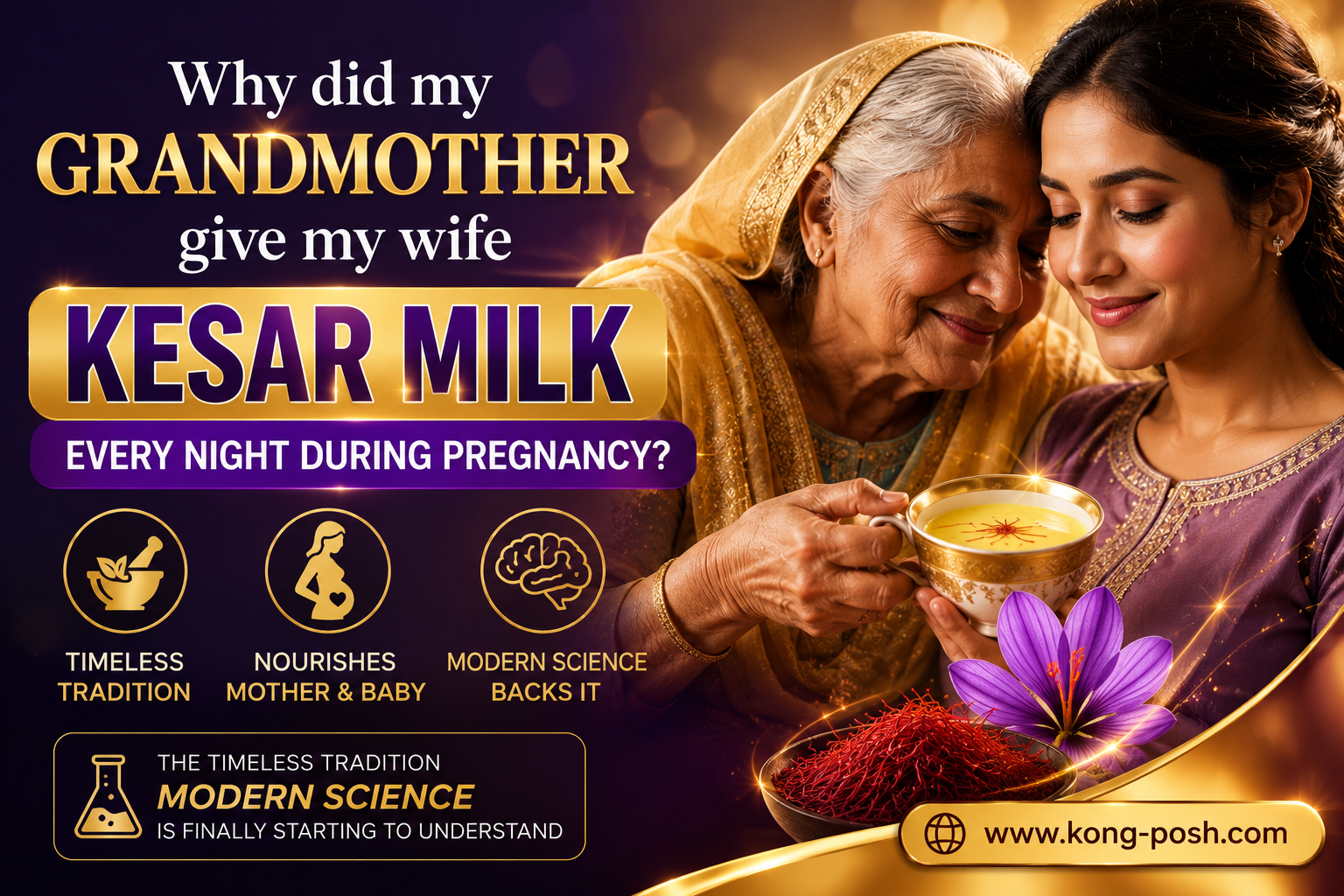
Why did my grandmother give my wife Kesar milk every night during pregnancy?
Some traditions survive for centuries because people continue to experience value from them.
When my wife became pregnant, my grandmother never missed reminding us about one simple evening ritual.
“Warm milk with a few strands of real Kesar.”
It wasn’t presented as a miracle.
It wasn’t promoted as a magical cure.
It was simply part of the family’s way of caring for an expecting mother.
At first, I wondered whether this tradition was just another old family belief passed down from generation to generation. But the more I learned about Kashmiri saffron, nutrition during pregnancy, and the importance of emotional well-being, the more I realized there was wisdom behind this practice.
Today, millions of people search Google with questions like:
- Is saffron good during pregnancy?
- Can pregnant women drink saffron milk?
- When should you start drinking Kesar milk?
- What are the benefits of saffron during pregnancy?
- Is Kashmiri saffron safe during pregnancy?
This article answers those questions honestly, combining traditional knowledge with current scientific understanding.
Pregnancy is more than nutrition
Pregnancy changes everything.
A woman’s body works around the clock.
Hormones fluctuate.
Energy levels rise and fall.
Sleep becomes unpredictable.
Stress increases.
The baby depends entirely on the mother’s health.
This is why many cultures have developed traditions centered around nourishing both body and mind.
In Kashmir, one of those traditions is enjoying warm milk with a very small amount of authentic saffron.
The emphasis has always been moderation, quality, and consistency rather than excess.
What is Kesar?
Kesar, commonly known as saffron, is one of the world’s most valuable spices.
It comes from the delicate flower Crocus sativus.
Each flower produces only three crimson stigmas, and every strand is carefully harvested by hand.
This labor-intensive process explains why genuine saffron is often called “red gold.”
Authentic Kashmiri saffron is particularly prized because of its:
- Rich aroma
- Deep crimson threads
- High concentration of natural compounds
- Strong coloring strength
- Distinct floral flavor
For centuries, Kashmiri families have treasured saffron not only as a culinary ingredient but also as part of their cultural heritage.
Why grandmothers believed in Kesar milk
Our grandparents rarely had scientific journals.
Instead, they relied on observation accumulated over generations.
They noticed that warm milk combined with a few strands of saffron seemed to encourage:
- Relaxation before bedtime
- Better emotional balance
- A comforting bedtime routine
- A nourishing evening drink
- Family care and connection
While tradition should never replace medical advice, modern research has begun exploring some of saffron’s naturally occurring compounds.
Scientists continue studying components such as crocin, crocetin, and safranal for their potential roles in mood, antioxidant activity, and overall well-being. Research is ongoing, and more high-quality studies are still needed before drawing firm conclusions.
What modern science says
Today’s researchers are investigating saffron in several areas.
Studies have explored its possible relationship with:
Emotional well-being
Pregnancy often brings emotional ups and downs.
Some studies have investigated saffron’s naturally occurring compounds in relation to mood support.
Although results are promising, pregnant women should never self-medicate or replace professional healthcare advice.
Antioxidant properties
Saffron naturally contains antioxidants.
Antioxidants help protect cells from oxidative stress, an important part of maintaining overall health.
Better bedtime routines
Warm milk itself is often associated with relaxation.
Adding authentic saffron creates a comforting ritual that many families continue today.
Culinary enjoyment
One of saffron’s greatest strengths remains its ability to elevate food naturally.
A few strands transform ordinary milk into an aromatic drink enjoyed across generations.
Can pregnant women consume saffron?
This is one of Google’s most searched questions.
The honest answer is:
Yes, but only in culinary amounts and only after discussing it with a qualified healthcare professional.
Large amounts of saffron are not recommended during pregnancy.
Traditionally, families use only a few strands in warm milk.
Every pregnancy is unique.
Women with high-risk pregnancies or specific medical conditions should always follow their obstetrician’s advice.
Responsible use is always better than excessive use.
When do many families traditionally introduce saffron?
In many South Asian households, saffron is commonly introduced later in pregnancy rather than during the early months.
However, there is no universal recommendation.
Medical guidance should always come first.
Every pregnancy deserves individualized care.
Does saffron make babies fair?
This is perhaps the biggest myth surrounding saffron.
There is no scientific evidence that eating saffron changes a baby’s skin color.
Skin complexion is determined primarily by genetics.
Families should appreciate saffron for its culinary heritage and nutritional role rather than unrealistic expectations.
Why authenticity matters more than quantity
The popularity of saffron has unfortunately led to widespread adulteration.
Many products contain:
- Artificial coloring
- Dyed fibers
- Corn silk
- Low-grade imports
- Mixed materials
During pregnancy, quality matters even more.
Choosing authentic saffron from trusted growers helps ensure you receive the product you intended to purchase.
How to prepare traditional Kesar milk
The recipe has remained almost unchanged for generations.
Ingredients:
- One cup of warm milk
- Three to five strands of authentic Kashmiri saffron
- Optional chopped almonds
- Optional pistachios
- Optional a small amount of honey after consulting your healthcare provider if appropriate
Method:
Soak the saffron strands for several minutes.
Add them to warm milk.
Allow the aroma and natural color to develop.
Drink slowly as part of a relaxing bedtime routine.
The focus is quality, not quantity.
Choosing genuine Kashmiri saffron
Before buying saffron, consider these points.
Authentic saffron should have:
- Deep crimson threads
- A naturally floral aroma
- No artificial shine
- Dry, delicate strands
- Strong coloring power with only a few threads
Avoid products that appear unnaturally bright or suspiciously inexpensive.
Real saffron requires thousands of flowers and careful harvesting.
If the price seems too good to be true, it often is.
The Saffron Cottage difference
At Saffron Cottage, saffron is not simply another product on a shelf.
It represents generations of dedication.
We are the growers of the FINEST KASHMIRI SAFFRON, harvesting from seven generations of family tradition.
Every strand reflects years of experience, careful cultivation, patient harvesting, and respect for nature.
Our commitment is simple:
Deliver authentic Kashmiri saffron that families can trust for cooking, celebrations, gifting, and cherished traditions passed from one generation to the next.
When families choose Saffron Cottage, they are choosing heritage, authenticity, and a story rooted in Kashmir’s rich agricultural legacy.
Frequently asked questions
Is saffron milk safe during pregnancy?
Culinary amounts may be appropriate for some pregnant women, but always consult your healthcare provider before adding saffron to your diet.
How much saffron should be used?
Traditionally, only a few strands are used in a cup of warm milk.
Can saffron guarantee health benefits?
No food can guarantee specific health outcomes. Saffron should be viewed as part of a balanced diet and healthy lifestyle.
Does saffron improve the baby’s complexion?
No. There is no scientific evidence supporting this belief.
Why do families continue this tradition?
Many families value it for its comforting ritual, cultural significance, pleasant flavor, and the enjoyment of authentic saffron as part of a balanced diet.
The tradition worth preserving
Every family has stories.
Some are recipes.
Some are rituals.
Some are lessons quietly passed from grandparents to grandchildren.
The evening cup of Kesar milk wasn’t simply about saffron.
It symbolized love.
Care.
Patience.
Hope.
Whether modern science continues to uncover additional benefits or not, one truth remains unchanged: traditions rooted in care often bring families together.
The key is to embrace those traditions responsibly, choose authentic ingredients, and always prioritize professional medical guidance during pregnancy.
If you are searching for genuine Kashmiri saffron, remember that authenticity begins at the source.
At Saffron Cottage, seven generations of growers continue to cultivate premium Kashmiri saffron with the same dedication that inspired our grandparents’ traditions.
Call to action
Looking for authentic Kashmiri saffron you can trust?
Experience the heritage of Saffron Cottage, where seven generations of dedicated growers bring you the finest Kashmiri saffron, carefully harvested to preserve its natural aroma, rich color, and exceptional quality. Whether you’re preparing traditional Kesar milk, enhancing your favorite recipes, or sharing a meaningful gift with loved ones, choose saffron that comes directly from a legacy of excellence. Discover the difference that genuine origin and uncompromising quality can make.