
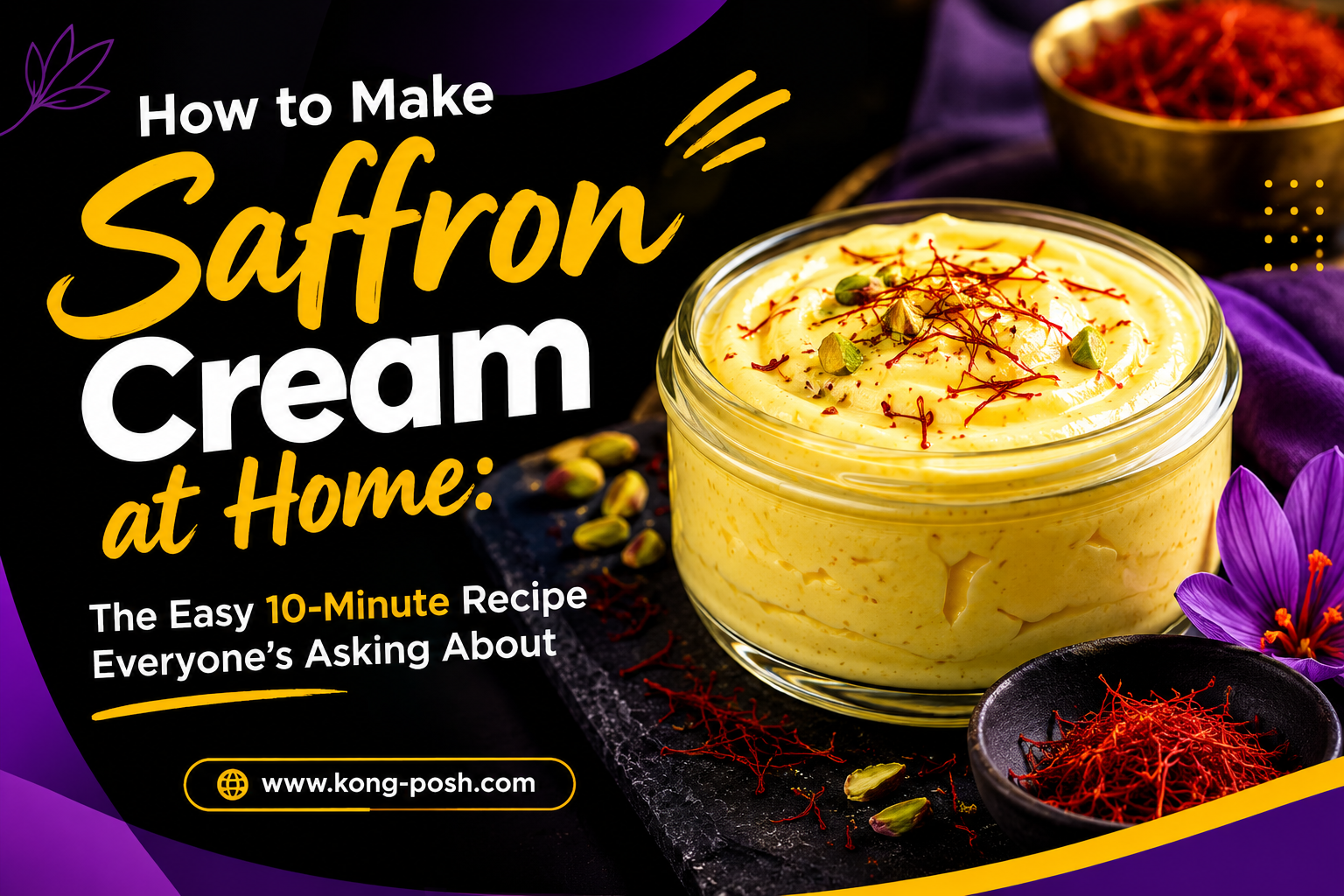
If you’ve typed “how to make saffron cream at home” into Google more than once this month, you’re not alone. Search interest in saffron-based skincare and dessert creams has quietly exploded over the last year, and honestly, it makes sense. Saffron is one of those rare ingredients that works just as well in a bowl of kheer as it does in a jar on your bathroom shelf. The problem is, most recipes floating around online either use so little saffron it does nothing, or they skip the one detail that actually matters: the quality of the saffron itself.
This guide is for home cooks, skincare DIY-ers, home bakers, and anyone who’s tired of bland store-bought creams loaded with preservatives. Whether you want a rich saffron cream for desserts, a saffron milk cream for your skin, or something to gift during the festive season, this recipe is simple enough to make on a weekday evening.
Why saffron cream is having a moment right now
Saffron has been part of Kashmiri kitchens and skincare routines for generations, but it’s only recently caught up with mainstream wellness trends. Clean-label skincare, “slow beauty,” and the return of traditional home remedies have all pushed saffron back into the spotlight. Add to that a growing awareness that most saffron sold online isn’t real saffron at all, and you get a moment where people genuinely want to learn to make things themselves, with ingredients they trust.
At Saffron Cottage, we’ve watched this shift closely. Our family has been growing and hand-harvesting Kashmiri saffron for seven generations, long before “clean beauty” was a hashtag. So when people ask us how to make saffron cream at home, we don’t just give a recipe, we tell you why the saffron you use changes the entire result.
What you’ll need
Before jumping into the method, here’s the honest truth: this recipe only has a handful of ingredients, which means each one carries weight. There’s no hiding a weak or dull saffron behind sugar or flavoring here.
- 6 to 8 strands of genuine Kashmiri saffron
- 1 cup fresh heavy cream or full-fat milk cream (malai)
- 2 tablespoons condensed milk or honey, depending on how sweet you want it
- A pinch of cardamom powder (optional, but traditional)
- 1 teaspoon warm milk or rose water, for blooming the saffron
If you’re making this for skin use rather than eating, swap the condensed milk for a spoon of raw honey or aloe vera gel instead.
Step-by-step: how to make saffron cream at home
Step 1: bloom the saffron first This is the step most recipes rush, and it’s the one that decides whether your cream actually tastes and smells like saffron. Take your saffron strands and soak them in one teaspoon of warm milk or rose water for at least 15 minutes. You should see the liquid slowly turn a deep golden-orange. If it barely changes color, the saffron isn’t strong enough, and no amount of it added later will fix that.
Step 2: whip the cream gently While the saffron blooms, whip your fresh cream lightly until it thickens slightly but doesn’t turn into whipped cream peaks. You want a smooth, pourable consistency, not stiff foam.
Step 3: combine and fold Pour the bloomed saffron liquid into the cream, strands and all. Fold it in gently rather than stirring hard, so the cream keeps its texture. Add the condensed milk or honey at this point, along with the cardamom powder if using.
Step 4: rest before use Cover the bowl and let it sit in the refrigerator for at least an hour. This resting time lets the saffron’s color and aroma spread evenly through the cream instead of sitting in patches.
Step 5: taste and adjust Give it a final taste or smell test. If the saffron flavor feels weak, that’s almost always a sign of low-quality strands rather than a mistake in your method. Good saffron will come through clearly even in small amounts.
A few tips that make a real difference
Use cream at room temperature before whipping, it blends more evenly with the saffron liquid. Never boil saffron directly, high heat destroys both its color and its aroma, which is why blooming in warm (not hot) liquid works better. Store your finished cream in a glass jar rather than plastic, since saffron’s natural compounds react better with glass over time.
How to use your saffron cream
For desserts, spoon it over kheer, phirni, or fresh fruit, or use it as a filling for pastries. For skin, apply a thin layer as a night mask two to three times a week, it’s known for helping with dullness and uneven tone. For gifting, small glass jars of homemade saffron cream tied with a ribbon make a thoughtful, personal gift during festive months, and they’re far more memorable than something store-bought.
Storage and shelf life
Because this cream uses fresh dairy, it should be stored in the refrigerator and used within four to five days. Skip preservatives entirely, and instead make smaller batches more often, that’s how it’s traditionally been done.
Why the saffron you choose matters more than the recipe
Here’s the part most blogs won’t tell you. A huge percentage of saffron sold online globally is diluted, dyed, or mixed with safflower. It looks similar in a photo, but it won’t bloom properly, won’t carry real aroma, and won’t turn your cream that deep golden color you’re expecting. This is exactly why we started Saffron Cottage. We grow and hand-harvest our saffron ourselves in Kashmir, a craft passed down through seven generations in our family, so what reaches you is the real thing, not a diluted imitation sitting in a fancy jar.
If you want your saffron cream to actually taste, smell, and look like saffron, it has to start with saffron that hasn’t been cut with anything else.
Frequently asked questions
Can I make saffron cream without heavy cream? Yes, you can substitute full-fat yogurt or malai, though the texture will be slightly less rich.
How do I know if my saffron is real? Real saffron turns water or milk a warm golden-orange gradually, not instantly, and has a slightly bitter, honey-like aroma rather than a sharp, artificial smell.
Is saffron cream good for the skin? Saffron is traditionally used to brighten skin tone and reduce dullness, though results vary and it isn’t a substitute for dermatological treatment for skin conditions.
How long does homemade saffron cream last? Around four to five days when refrigerated in a clean, airtight glass container.
Can I use saffron cream daily? For skin use, two to three times a week is generally recommended rather than daily use, to avoid over-exfoliation from repeated application.
Try it this week
Homemade saffron cream is one of those small kitchen projects that feels far more special than the ten minutes it actually takes. The only thing standing between you and a genuinely rich, golden cream is the saffron you start with. If you’d like to try this recipe with saffron that’s actually grown and harvested by hand, not mass-produced or cut with fillers, explore our seventh-generation Kashmiri saffron at Saffron Cottage and taste the difference for yourself in your very first batch.