
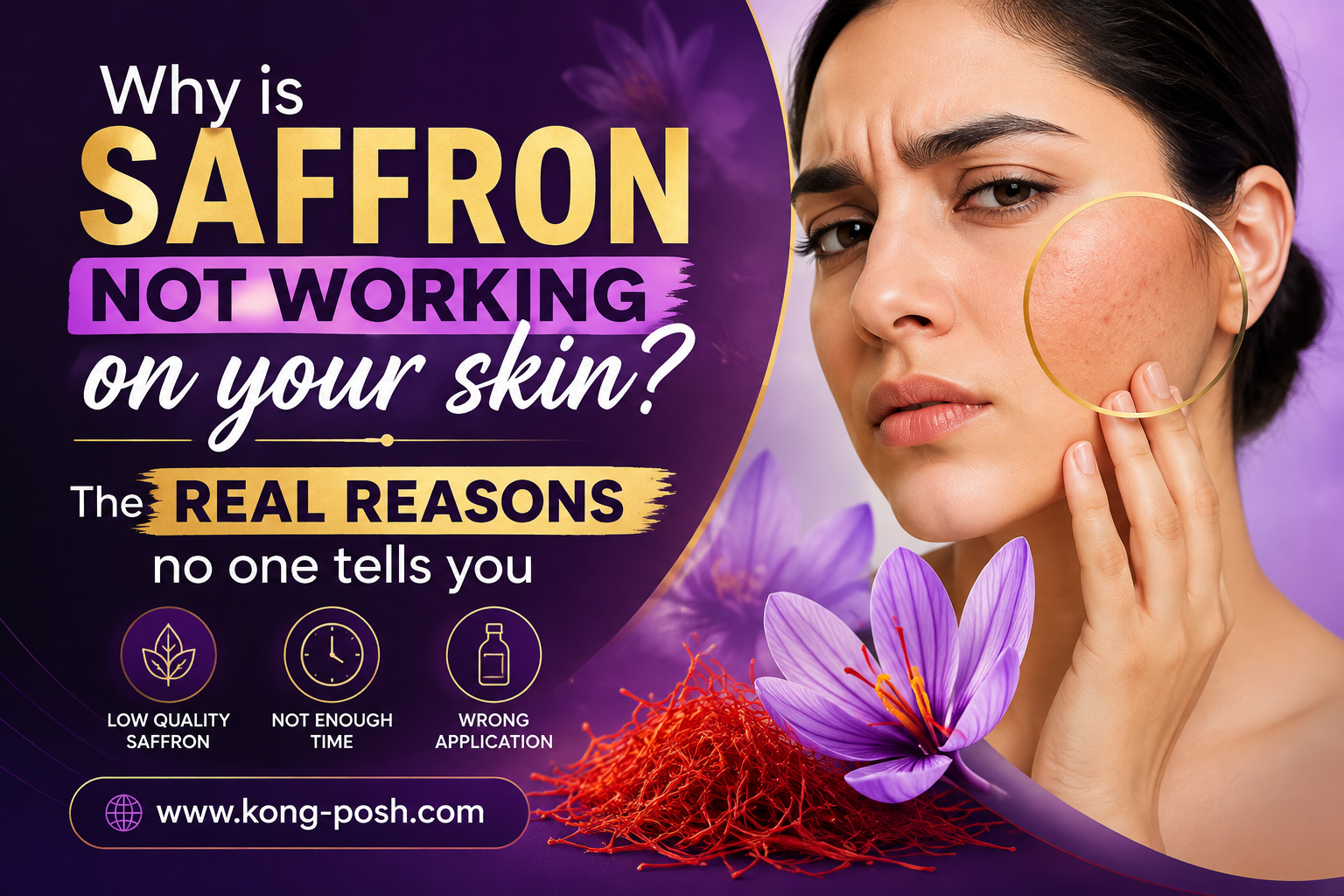
If you’ve spent the last few weeks applying a saffron cream, a kesar face pack, or a homemade saffron and milk mask and your skin still looks the same, you are not imagining it, and you are not doing something obviously wrong. You’re also not alone. Saffron is one of the most searched skincare ingredients right now, and it is also one of the most misunderstood. Somewhere between old family remedies and Instagram reels promising “instant glow,” a lot of the actual science got lost. Before you write off saffron completely, it’s worth understanding why it might be failing you, because in most cases, the ingredient isn’t the problem. Something around it is.
Who this is for
This is for anyone who has tried a saffron-based product on their skin, whether store-bought or homemade, and felt disappointed by the results. If you’re dealing with dullness, uneven tone, dark spots, or you were simply chasing that “kesar glow” your grandmother used to talk about, this breakdown is meant to save you time, money, and another round of disappointment.
Reason one: the saffron you’re using probably isn’t real saffron
This is the most common reason, and it’s rarely talked about honestly. Saffron is the most expensive spice in the world by weight, which makes it one of the most adulterated ingredients in the beauty and food industry. A large share of what’s sold online as “pure saffron” is cut with safflower, corn silk dyed red, or synthetic colouring designed to mimic the deep red-orange of real strands. None of these contain crocin, the compound responsible for saffron’s antioxidant and anti-inflammatory activity. If the active compound isn’t there, the product has no way of working, no matter how nicely it’s packaged or how many strands are floating in the jar. This is exactly why sourcing matters more than almost anything else in saffron skincare. Genuine Kashmiri saffron, grown in the Pampore region and harvested by hand, has one of the highest crocin concentrations of any saffron in the world. At Saffron Cottage, we’ve been growing and hand-harvesting this exact saffron for seven generations, which is the only reason we can say with confidence what real saffron actually looks, smells, and performs like. If your saffron doesn’t have a strong, slightly bitter aroma and doesn’t release a warm golden colour within seconds in warm water, it likely isn’t doing much for your skin either.
Reason two: you’re expecting saffron to do a moisturizer’s job
A lot of the disappointment with saffron comes from mismatched expectations. Saffron is not a hydrator. Independent studies going back over a decade have found no measurable difference in skin moisture between saffron-treated skin and untreated skin. What saffron is genuinely good at, when the crocin content is high enough, is calming inflammation, supporting the skin’s natural antioxidant defences against UV-driven damage, and gradually improving dullness and texture over time. If your skin feels tight, flaky, or dehydrated, saffron is not going to solve that on its own. It works better as a supporting ingredient alongside a proper moisturizer, not as a replacement for one.
Reason three: you’re chasing overnight results from a slow-acting ingredient
Saffron’s benefits build up. This is not a same-day whitening agent, and any product claiming instant, dramatic skin lightening is overpromising. What the research does support is a gradual reduction in hyperpigmentation and a visible improvement in dullness with consistent use over several weeks, not two applications. This is the part that gets lost in viral skincare content: the “kesar glow” generations of women have relied on came from consistent, long-term use, often alongside oral consumption, not a single overnight mask. If you tried it three times and stopped, you haven’t actually tested whether it works.
Reason four: your skin’s pH and layering routine are working against it
This one is rarely mentioned outside dermatology circles, but it matters. Healthy skin sits at a slightly acidic pH, roughly between 4.5 and 5.5. A saffron toner, soap, or face wash formulated at the wrong pH can quietly disrupt your skin barrier, triggering irritation or excess oil production that masks any benefit saffron might otherwise offer. Layering matters too. Saffron generally pairs well with hyaluronic acid, niacinamide, and ceramides, but it does not sit well with strong exfoliating acids like glycolic or salicylic acid used at the same time, since these can destabilise the compounds responsible for saffron’s colour and activity. If you’re using saffron right after a strong acid toner, you may be cancelling out the very thing you’re trying to benefit from.
Reason five: you’re applying it, when you should also be consuming it
Topical saffron has documented benefits, but a meaningful part of saffron’s traditional reputation for skin health comes from oral consumption, not application. Ingesting a small, safe amount of saffron regularly, such as a few strands steeped in warm milk, has been associated with supporting the skin’s internal antioxidant response to UV exposure over time. This is not a replacement for sunscreen, and it never will be, but it does explain why families that have used saffron for generations often talk about it as something you drink as much as something you apply. If your entire saffron routine is topical, you may be missing half of the traditional method.
What actually works, and why sourcing is the deciding factor
None of the five reasons above matter if the saffron itself is weak or fake. This is the point worth sitting with. Purity is not a marketing detail in saffron, it is the entire difference between a product that works and one that doesn’t. At Saffron Cottage, our saffron is grown and hand-picked by our own family across seven generations in Kashmir, harvested at peak potency, and never blended, diluted, or artificially coloured. When crocin content is where it should be, the results people describe, the gradual brightening, the calmer texture, the subtle warmth in the complexion, are the ones backed by actual research, not marketing language.
The bottom line
Saffron is not a broken promise. In most cases, what’s broken is the sourcing, the expectations, or the routine around it. Before you decide saffron “doesn’t work” on your skin, ask yourself honestly whether you’ve used the real thing, given it enough time, and paired it with the right routine. Skin that has waited years for a genuine glow deserves at least a few consistent weeks with the real ingredient before you rule it out.
If you’re ready to try saffron that’s actually strong enough to work, this is the moment to switch, not next month, not after finishing the jar you’re unsure about. Every week spent on diluted or fake saffron is a week your skin isn’t getting what it needs. Explore Saffron Cottage’s seven-generation, hand-harvested Kashmiri saffron and give your skin the version of this ingredient that traditional remedies were actually built on.