
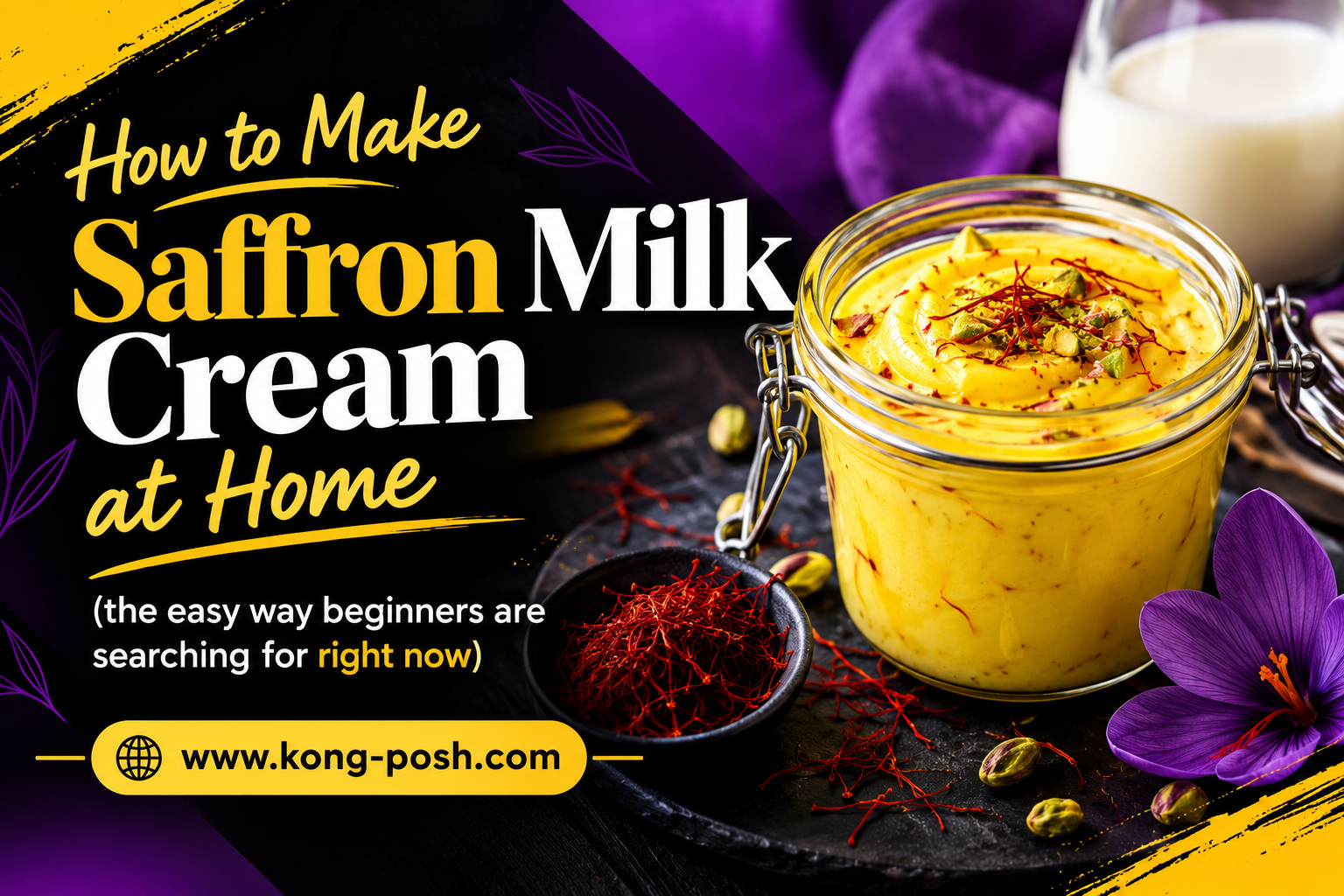
If you have typed “saffron milk cream recipe” or “how to make saffron milk at home” into Google in the last few weeks, you are not alone. Search interest in saffron-based drinks has been climbing steadily, especially since golden milk, moon milk, and other slow-living wellness drinks took over social media. But somewhere between the reels and the aesthetic mason jars, one thing keeps getting lost: most people are not using real saffron. They are using dyed, low-grade threads that give color but almost none of the aroma, flavor, or benefits that saffron is actually known for.
We are Saffron Cottage, growers of Kashmiri saffron for seven generations. Long before saffron milk became a trending drink, it was something our own family made at home, in winter, when the harvest was fresh and the air in Pampore was cold enough to see your breath. So when we say this recipe is beginner-friendly, we mean it in the most literal sense — it is the same version we teach people who have never touched a saffron thread in their life.
This is a normal recipe, written the way you would actually cook it in your kitchen, not a stylized version made for a photo.
Who this recipe is for
This blog is written for a few kinds of people, and if you fall into any of these, keep reading. First, beginners who have never cooked with saffron before and are slightly intimidated by it. Second, people who tried a saffron milk recipe once, felt underwhelmed, and are wondering if saffron is even worth the hype. Third, anyone currently interested in wellness drinks, Ayurvedic remedies, or slow morning and night routines, since saffron milk fits naturally into that habit. And finally, buyers who are tired of guessing whether the saffron sitting in their kitchen cabinet is real or not.
If you are here to learn the recipe and also finally understand what real saffron should look, smell, and taste like, this one is for you.
Why saffron milk cream is having a moment again
There is a reason this recipe keeps resurfacing every year around this time. Cold weather months naturally push people toward warm, comforting drinks, and saffron milk sits right in that space between a dessert and a remedy. It is being talked about again because of the renewed interest in Ayurveda-backed ingredients, the rise of “golden hour” night routines before bed, and a general shift toward drinks that feel like self-care rather than just a beverage. Saffron milk cream, specifically, has become popular because it is thicker, richer, and more indulgent than plain saffron milk — closer to a dessert you can spoon out and enjoy slowly.
The urgency here is simple. Genuine Kashmiri saffron comes from a very short harvest window, usually late October to November, and the quantity grown each year is limited. What is being sold as “Kashmiri saffron” in bulk online, in large quantities and at low prices, is very often not from Kashmir at all. If you want to actually taste the difference this recipe is built around, buying real saffron while it is available matters more than people realize.
What you will need
For a basic saffron milk cream that serves two to three people, you will need full-fat milk, a small pinch of good quality Kashmiri saffron threads, a natural sweetener like sugar, honey, or jaggery depending on your preference, a few strands of cardamom for warmth, and a handful of chopped nuts such as almonds, pistachios, or cashews if you want texture. That is genuinely all you need. Saffron does not need a long list of ingredients around it. In fact, too many competing flavors will bury the very thing you are trying to taste.
Step by step, for someone doing this for the first time
Start by warming a tablespoon of milk, not boiling it, just warm enough that it is comfortable to touch. Add six to eight saffron threads into this warm milk and let it sit for ten to fifteen minutes. This step is where most beginners rush, and it is the one step you should not skip. Saffron needs time and gentle warmth to release its color and aroma; if you add it directly into boiling milk, you lose a large part of what makes it special.
While that soaks, heat the rest of your milk on low to medium flame in a heavy-bottomed pan. Let it come to a gentle simmer, stirring occasionally so it does not stick to the bottom. Once it has reduced slightly, usually after eight to ten minutes, add your sweetener of choice and stir until it fully dissolves. Now pour in your saffron-infused milk, threads and all, and give it a slow stir. You will notice the color change almost immediately, a soft golden-orange shade that does not look artificial because it is not.
Add a pinch of crushed cardamom at this stage. Let the milk simmer for another five minutes on low flame, allowing everything to come together. This is the point where the “cream” texture starts to form naturally, especially if you continue simmering gently and stirring occasionally rather than boiling on high heat. If you want an even thicker, more dessert-like cream, you can add a tablespoon of milk powder or condensed milk here, though this is optional and not something we grew up doing in our own kitchen.
Turn off the heat and let it sit for two to three minutes before pouring it into a cup or bowl. Top it with chopped nuts. You can drink it warm, or refrigerate it for a few hours if you prefer it chilled and slightly thicker, almost like a saffron kheer in liquid form.
Common mistakes beginners make with this recipe
The most common mistake is using too little saffron and expecting a strong flavor. Real saffron works in small quantities, but it needs to actually be given time to bloom in warm milk first. The second mistake is boiling the saffron directly on high heat, which destroys much of its aroma. The third, and most important one, is using saffron that has been dyed or mixed with safflower, which will give you a similar orange color but almost no fragrance and a flat, sometimes bitter taste. If your saffron milk smells like nothing, the problem is very rarely your technique. It is very often the saffron itself.
How to tell if your saffron is real before you even cook with it
A quick check we always recommend to beginners is this: drop two or three threads into a cup of warm water or milk. Real Kashmiri saffron releases its color slowly, over ten to fifteen minutes, and the water turns a golden-yellow, not deep red instantly. If the color bleeds out immediately and turns the water red within seconds, you are very likely holding dyed threads, not saffron. Real saffron also has a distinct, slightly sweet, earthy aroma, not a sharp, chemical smell.
This is exactly why we started Saffron Cottage the way we did. Being seventh-generation growers from Kashmir means we are not just selling a product, we are protecting a harvest that our family has worked with our entire lives, and we would rather you make this recipe once with real saffron than five times with something that only looks like it.
A simple call to action
If this is the first time you are making saffron milk cream, start small. Buy a small quantity of authentic, lab-tested Kashmiri saffron, try this exact recipe this week, and notice the difference for yourself, in the aroma before you even taste it. Saffron Cottage ships saffron directly from harvest, so what reaches your kitchen is close to what our own family drinks at home. Given how limited each season’s harvest is, we would genuinely suggest not waiting until it runs out to try it.
If you make this recipe, we would love to see it. Tag us, share it, or simply tell a friend who has been asking about saffron milk but has never made it properly.