
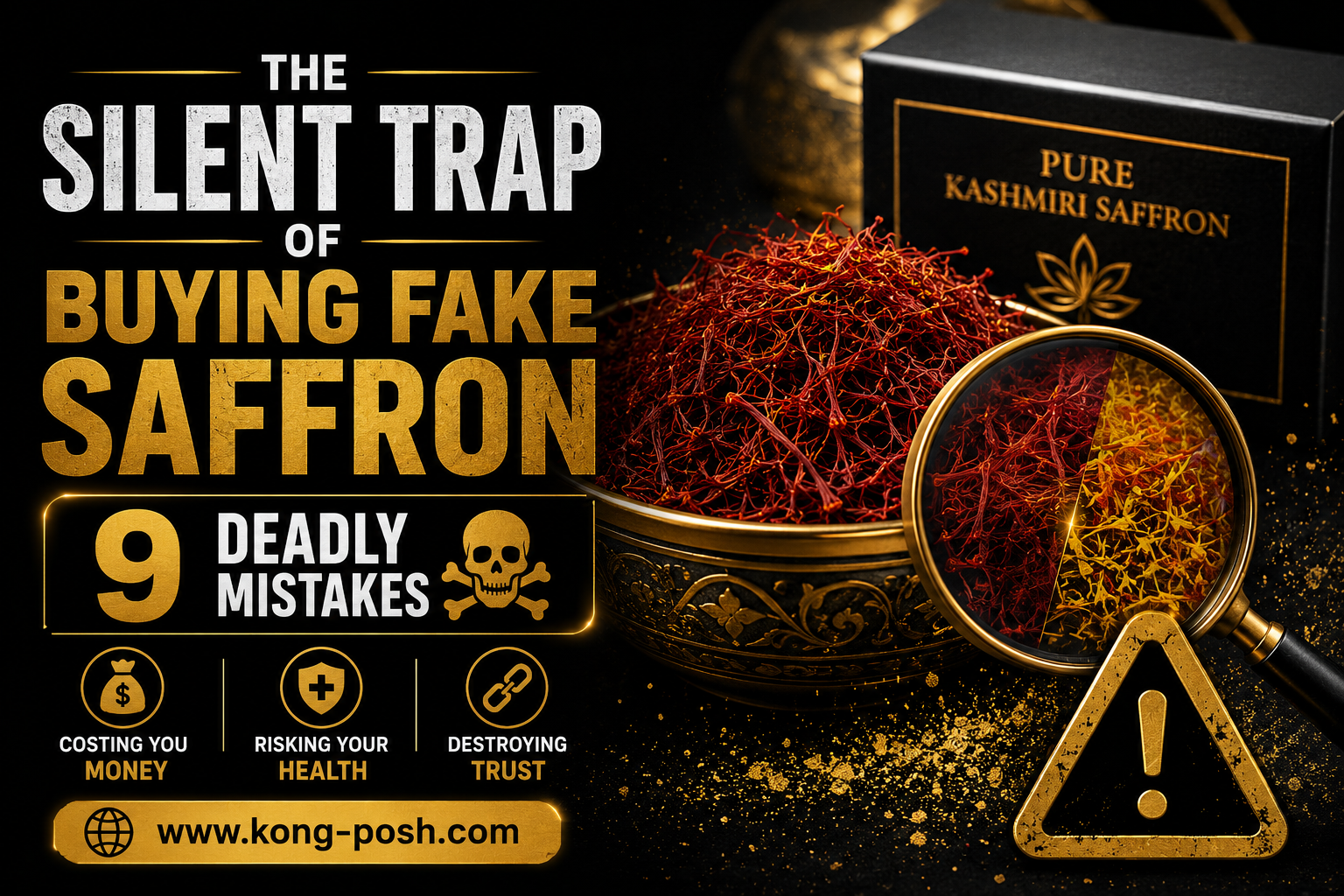
THE SILENT TRAP OF BUYING SAFFRON IN 2026
Saffron is no longer just a spice. It is now one of the most counterfeited natural products in the world. With rising global demand in wellness, skincare, luxury cuisine, and natural remedies, saffron has become a high-risk purchase category where buyers often lose money without even realizing it.
At Saffron Cottage, we are 7th-generation saffron growers from Kashmir, and we have seen the market shift dramatically. What used to be a trusted farm-to-table spice is now flooded with artificial coloring, low-grade imports, and misleading packaging.
If you are buying saffron today, you are not just shopping. You are navigating a minefield.
Below are the most critical mistakes buyers make and how you can avoid them before it is too late.
- TRUSTING COLOR INSTEAD OF PURITY
One of the biggest misconceptions is that deeper red saffron means better quality. This is no longer reliable. Many counterfeit products are chemically enhanced to appear darker and more appealing.
Real Kashmiri saffron has natural deep crimson strands with slight orange tips. It does not instantly bleed strong color in water. Instead, it releases a slow golden hue.
If your saffron turns water red instantly, you are likely looking at artificial coloring.
- FALLING FOR CHEAP PRICING TRAPS
In 2026, saffron pricing has become more transparent globally, but fake sellers still lure buyers with extremely low prices.
True Kashmiri saffron is hand-harvested from delicate flowers and requires thousands of blossoms for a single kilogram. Any product priced unusually low is almost certainly diluted, mixed, or fake.
Remember this: if the price feels too good to be true, the saffron is not real.
- IGNORING ORIGIN TRANSPARENCY
A major mistake buyers make is not checking origin authenticity. Many sellers use vague terms like “premium saffron” without specifying where it is grown.
Authentic saffron should clearly state its origin. Kashmiri saffron from Pampore region is globally recognized for its superior aroma, color strength, and crocin content.
At Saffron Cottage, we ensure full traceability from farm to packaging because transparency is not optional anymore; it is essential.
- BUYING POWDERED SAFFRON WITHOUT TESTING
Powdered saffron is one of the highest-risk forms to purchase. It is easily mixed with turmeric, paprika, or synthetic dyes.
Unless it comes with certified lab testing or is ground under your supervision, powdered saffron should be avoided.
Whole stigma saffron is always safer and easier to verify.
- OVERLOOKING AROMA AS A QUALITY INDICATOR
A lot of buyers focus only on appearance and forget aroma. Real saffron has a strong, hay-like, slightly metallic fragrance that is unmistakable.
Fake saffron often smells dull or artificially perfumed. Aroma is one of the fastest ways to detect authenticity without any lab equipment.
- BELIEVING ALL “ISO” OR “LAB CERTIFIED” LABELS BLINDLY
Certifications are important, but not all certifications are equal. Some low-quality exporters use outdated or irrelevant certifications to appear trustworthy.
Always verify whether the certificate is recent, traceable, and issued by a recognized food testing authority.
Do not rely on labels alone; rely on consistency and source credibility.
- STORING SAFFRON THE WRONG WAY AFTER PURCHASE
Even genuine saffron loses potency if stored incorrectly. Exposure to light, moisture, and air can degrade its essential compounds.
Saffron should always be stored in airtight glass containers, away from heat and sunlight. Many buyers unknowingly destroy quality after purchase due to improper storage.
- NOT UNDERSTANDING THE MARKET SHIFT IN 2026
The saffron industry is changing rapidly. Demand from wellness industries, luxury food brands, and cosmetic companies has increased global competition. This has also increased fraud activity.
AI-based food fraud detection systems and lab testing technologies are now being used globally, but not all sellers are compliant yet.
As a buyer, awareness is your strongest protection.
- IGNORING DIRECT FARM SOURCING OPTIONS
The safest way to buy saffron today is directly from growers or verified farm networks. Middlemen often dilute quality or mix batches from different sources.
At Saffron Cottage, we operate as direct 7th-generation growers, eliminating unnecessary intermediaries. This ensures purity, consistency, and traceability in every strand.
WHY THIS MATTERS MORE THAN EVER
Saffron is not just a culinary ingredient anymore. It is used in wellness drinks, skincare formulations, natural supplements, and luxury dining. This makes purity critical not just for taste but for safety and effectiveness.
Fake saffron is not just a financial loss. It is a trust breach in what you consume.
CALL TO ACTION
If you are serious about authentic saffron, it is time to stop guessing and start sourcing directly from growers who understand purity at its origin.
Saffron Cottage brings you 7th-generation Kashmiri saffron harvested with traditional precision and modern quality control standards.
Do not wait until you experience a bad purchase. The market is evolving fast, and fake saffron is becoming harder to detect.
Take control of what you consume. Choose verified origin. Choose authenticity. Choose trust.