
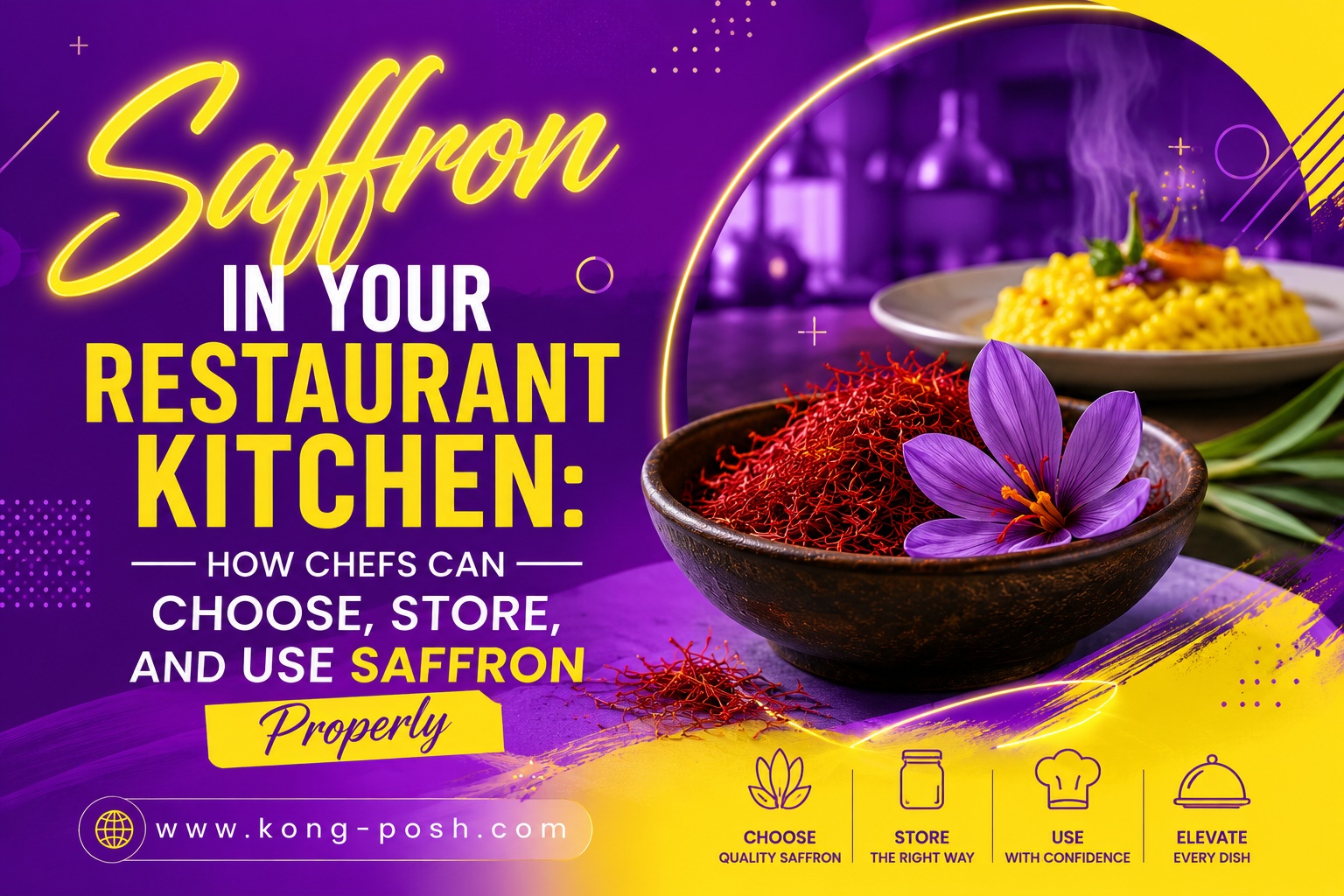
Saffron is one of those ingredients that can completely change a dish, but only when you know how to use it. A few delicate threads can bring aroma, colour, warmth and depth to rice, seafood, sauces, desserts and drinks. The problem is that not every saffron product delivers the same result, and many kitchens waste this expensive spice by storing it incorrectly or adding it at the wrong stage of cooking.
For chefs, restaurant owners and professional kitchens, saffron should not be treated simply as a luxury garnish. It is a high-value culinary ingredient that needs the same attention given to premium olive oil, aged cheese, specialty chocolate or carefully selected spices.
With saffron prices, authenticity concerns, food trends and customer expectations continuing to shape modern restaurant kitchens, knowing how to source and use saffron has become increasingly important.
At Saffron Cottage, we are growers of the finest Kashmiri saffron, with saffron harvesting carried through seven generations. That heritage gives us a deep appreciation for what chefs actually need: genuine quality, reliable aroma, beautiful colour and an ingredient that earns its place on the menu.
Why chefs are paying more attention to saffron
Modern diners are increasingly interested in ingredients with a story.
They want to know where food comes from, why an ingredient costs more and what makes a dish different from something they could prepare at home. This has created an opportunity for restaurants to use premium ingredients more intentionally.
Saffron fits naturally into this movement.
It is visually distinctive, intensely aromatic and associated with culinary traditions across Kashmir, India, the Middle East, Spain, Persia and other regions. Used correctly, it can turn a familiar dish into a signature menu item.
But there is an important difference between using saffron because it sounds premium and using it because it genuinely improves the dish.
Professional kitchens need the second approach.
What should chefs look for when buying saffron?
The first rule is simple: do not buy saffron based only on price.
Extremely cheap saffron should raise questions, especially when the product is sold as premium-grade saffron. Saffron is labour-intensive to harvest, and genuine high-quality threads command a premium for a reason.
Chefs should consider several factors before purchasing.
Appearance
High-quality saffron is generally sold as identifiable threads rather than an unidentified powder.
Look closely at the threads. They should have a natural red to deep crimson appearance rather than looking unnaturally bright.
Powder is harder to assess visually and can be more difficult for a professional buyer to authenticate.
Aroma
Saffron should have a distinctive aroma. It should not smell musty, chemically perfumed or excessively sweet.
For chefs, aroma matters because saffron’s contribution to a dish is not simply colour. Its fragrance is one of the reasons the ingredient is so valuable.
Source and traceability
Ask where the saffron comes from.
A serious supplier should be able to explain its origin, sourcing practices and product quality. For restaurants building premium menus, traceability also supports a stronger ingredient story for customers.
This is where the heritage behind Saffron Cottage’s seven generations of Kashmiri saffron harvesting becomes meaningful. The ingredient is connected to an agricultural tradition rather than being treated as just another commodity spice.
Packaging
Saffron should be protected from moisture, heat, light and strong surrounding aromas.
If the packaging allows the product to absorb moisture or sit exposed to sunlight, its quality can deteriorate over time.
Whole saffron threads or saffron powder: which is better for restaurants?
For many professional kitchens, whole threads are the more practical choice.
Threads allow chefs to inspect the product before using it. They also make portion control easier and provide greater confidence about what is actually being purchased.
Powder can be convenient, particularly for certain commercial applications, but it requires greater trust in the supplier because visual inspection becomes much more difficult.
If saffron is an important part of your restaurant’s identity, whole threads can also become part of the presentation.
Imagine serving a delicate saffron dessert with a few genuine saffron threads placed carefully on top.
The customer sees the ingredient.
The customer smells it.
The customer remembers it.
That is very different from simply colouring a dish yellow.
How should chefs prepare saffron before cooking?
One of the most important techniques is infusion.
Instead of throwing dry saffron directly into a large pot and hoping its flavour spreads evenly, chefs can gently release its aroma and colour into a small amount of warm liquid.
Depending on the recipe, that liquid could be water, stock, milk or another suitable culinary base.
The basic approach is straightforward:
Gently crush or bruise the saffron threads if the recipe calls for it, then steep them in warm liquid before incorporating the infusion into the dish.
Avoid aggressively boiling the saffron for a long time. The objective is to extract its character without unnecessarily exposing the delicate aromatic compounds to harsh heat.
The exact preparation should always be adjusted according to the dish, cooking method and desired intensity.
How much saffron should a restaurant use?
This is where professional kitchens need discipline.
More saffron does not automatically mean a better dish.
Saffron is powerful. Using excessive quantities can make a dish unnecessarily expensive and may overwhelm its other flavours.
Restaurants should establish a consistent recipe specification for each menu item.
For example, rather than allowing every chef to add saffron by eye, establish a measured amount per portion or batch.
This creates three advantages:
Consistent flavour.
Better food-cost control.
Predictable customer experience.
When saffron is expensive, precision is not just a culinary principle. It is a business principle.
Where can chefs use saffron?
Saffron has remarkable versatility.
Saffron rice
Rice is one of the most natural applications for saffron.
A saffron-infused stock can introduce fragrance throughout the rice while saffron threads can provide an attractive finishing touch.
Restaurants can use the technique across biryani, pulao, Persian-inspired rice dishes, Mediterranean preparations and contemporary rice dishes.
Seafood
Saffron works particularly well with seafood.
Its floral and earthy character can complement prawns, mussels, fish and shellfish without requiring an excessive number of additional ingredients.
A saffron seafood broth can also become a strong signature component of a restaurant menu.
Sauces
A carefully balanced saffron sauce can add sophistication to pasta, seafood, poultry and vegetables.
The key is balance.
Saffron should support the sauce rather than become the only flavour the diner experiences.
Desserts
Saffron is particularly interesting in modern pastry.
Think saffron panna cotta, saffron ice cream, saffron custard, saffron rice pudding, saffron cheesecake or saffron-infused milk desserts.
It pairs especially well with ingredients such as cardamom, rose, pistachio, almond, honey, citrus and vanilla.
Beverages
Saffron can also move beyond the plate.
Restaurants can explore saffron milk, specialty tea, mocktails, contemporary lattes and dessert beverages.
For restaurants looking to develop premium non-alcoholic beverage menus, saffron can provide a distinctive ingredient story.
The biggest saffron mistake restaurants make
One of the most common mistakes is treating saffron as a colouring agent.
Saffron certainly contributes colour, but its real culinary value comes from its combination of aroma, flavour and colour.
If your kitchen is using saffron primarily to make food yellow, you may be missing what makes the spice special.
There are less expensive ways to create colour.
The reason chefs pay a premium for genuine saffron is its complete sensory profile.
How should restaurants store saffron?
Proper storage is essential.
Keep saffron in an airtight container and protect it from:
Heat
Humidity
Direct sunlight
Strong kitchen aromas
Frequent exposure to air
Do not store saffron beside strongly scented ingredients if the container is not properly sealed.
A professional kitchen should also avoid repeatedly opening a large saffron container throughout the day.
Instead, consider maintaining a carefully sealed main supply and transferring a smaller working quantity for daily use.
This can reduce unnecessary exposure.
How long does saffron last?
Saffron does not suddenly become useless after a particular date, but its quality can gradually decline.
A well-stored product can retain its characteristics for a considerable period, but freshness, storage conditions and initial quality all matter.
For a restaurant, the goal should not simply be to keep saffron for as long as possible.
The better question is:
Are we using the ingredient while it still delivers the sensory experience our customers are paying for?
That mindset changes how premium ingredients are managed.
Saffron and restaurant food costing
This is where chefs and restaurant owners need to think beyond the ingredient’s purchase price.
Saffron may be expensive per gram, but the quantity used per dish can be relatively small.
A restaurant should calculate the actual saffron cost per portion rather than judging the ingredient solely by its price per gram.
Suppose a signature dish uses a carefully measured quantity of premium saffron.
That ingredient can become part of the dish’s value proposition.
Instead of hiding the cost, restaurants can communicate the ingredient story.
For example:
“Prepared with premium Kashmiri saffron.”
That small detail can make a dish feel more distinctive when the claim is genuine and the ingredient is actually present.
How saffron can help create a signature restaurant dish
The strongest restaurant menus are not always built around the most complicated recipes.
Sometimes the difference is one memorable ingredient.
A chef could take a familiar dessert and introduce saffron.
A classic rice dish could become a saffron signature.
A seafood broth could gain a completely different aromatic profile.
A milk-based drink could become a premium seasonal special.
The opportunity is not simply to add saffron to everything.
It is to identify one or two dishes where saffron genuinely creates a reason to order.
That is a much stronger culinary strategy.
The new restaurant trend: ingredient storytelling
Restaurants increasingly compete on more than taste.
Customers also respond to provenance, craftsmanship, authenticity and the story behind ingredients.
This creates an important opportunity for premium saffron.
Instead of writing only:
“Chicken rice”
a menu could explain the dish more meaningfully when appropriate:
“Fragrant rice prepared with premium Kashmiri saffron and aromatic spices.”
The description should remain truthful and avoid exaggerated claims.
For restaurants, the ingredient story becomes part of the dining experience.
And when the story is connected to generations of cultivation, it becomes even more compelling.
Why Kashmiri saffron deserves attention
Kashmir has a long-standing association with saffron cultivation.
For chefs interested in premium ingredients, the origin of saffron matters because geography, cultivation practices, harvesting and processing can influence the final product.
At Saffron Cottage, our positioning is built around the finest Kashmiri saffron and a seven-generation harvesting heritage.
That is not just a marketing line.
It represents the relationship between the grower, the crop and the culinary ingredient.
For professional kitchens, that connection matters because sourcing should be about more than filling a jar.
It should be about knowing what you are putting on the customer’s plate.
A practical saffron purchasing strategy for restaurants
Before placing your next saffron order, ask your supplier:
Where is the saffron grown?
Is it supplied as whole threads?
How is it harvested and processed?
How is quality assessed?
How should it be stored?
What packaging is used?
Can the supplier explain its origin and sourcing story?
Is the product consistent from batch to batch?
Can the supplier support restaurant quantities?
These questions can prevent costly mistakes.
A premium restaurant cannot afford to build a signature dish around an ingredient that suddenly changes quality from one purchase to the next.
How restaurants can work with Saffron Cottage
For chefs and restaurant owners looking for premium Kashmiri saffron, Saffron Cottage offers a direct connection to an ingredient rooted in generations of saffron harvesting.
Our story begins with the growers.
Seven generations of Kashmiri saffron harvesting. One ingredient. Countless culinary possibilities.
Whether you are developing a new restaurant menu, creating a signature dish, upgrading your spice selection or looking for a premium ingredient for hospitality use, saffron should be sourced with the same care you give to every other important ingredient.
The goal is not to use more saffron.
The goal is to use better saffron, more intelligently.
Before your restaurant orders saffron, ask one final question
Will your customer actually notice the difference?
If the answer is yes, premium saffron can be a powerful addition to your kitchen.
If the answer is no, reconsider the recipe, the quantity, the preparation or even the sourcing.
Premium ingredients deserve premium treatment.
And saffron is too valuable to waste.
Final thoughts for chefs
Saffron has survived centuries of culinary traditions because it offers something few ingredients can replicate.
Its aroma is distinctive.
Its colour is recognisable.
Its flavour can transform simple food into something memorable.
But the ingredient only performs when chefs understand how to source it, prepare it, measure it and store it.
For modern restaurants, the opportunity is bigger than simply adding saffron to a recipe.
It is about creating dishes with identity.
It is about giving customers something they remember.
It is about turning a small quantity of a precious ingredient into a meaningful culinary experience.
And that starts with choosing the right saffron.
If you are a chef, restaurant owner, hotel, caterer or hospitality professional looking for premium Kashmiri saffron, explore Saffron Cottage and start a conversation about your kitchen’s requirements. Your next signature dish may begin with just a few carefully chosen threads.