
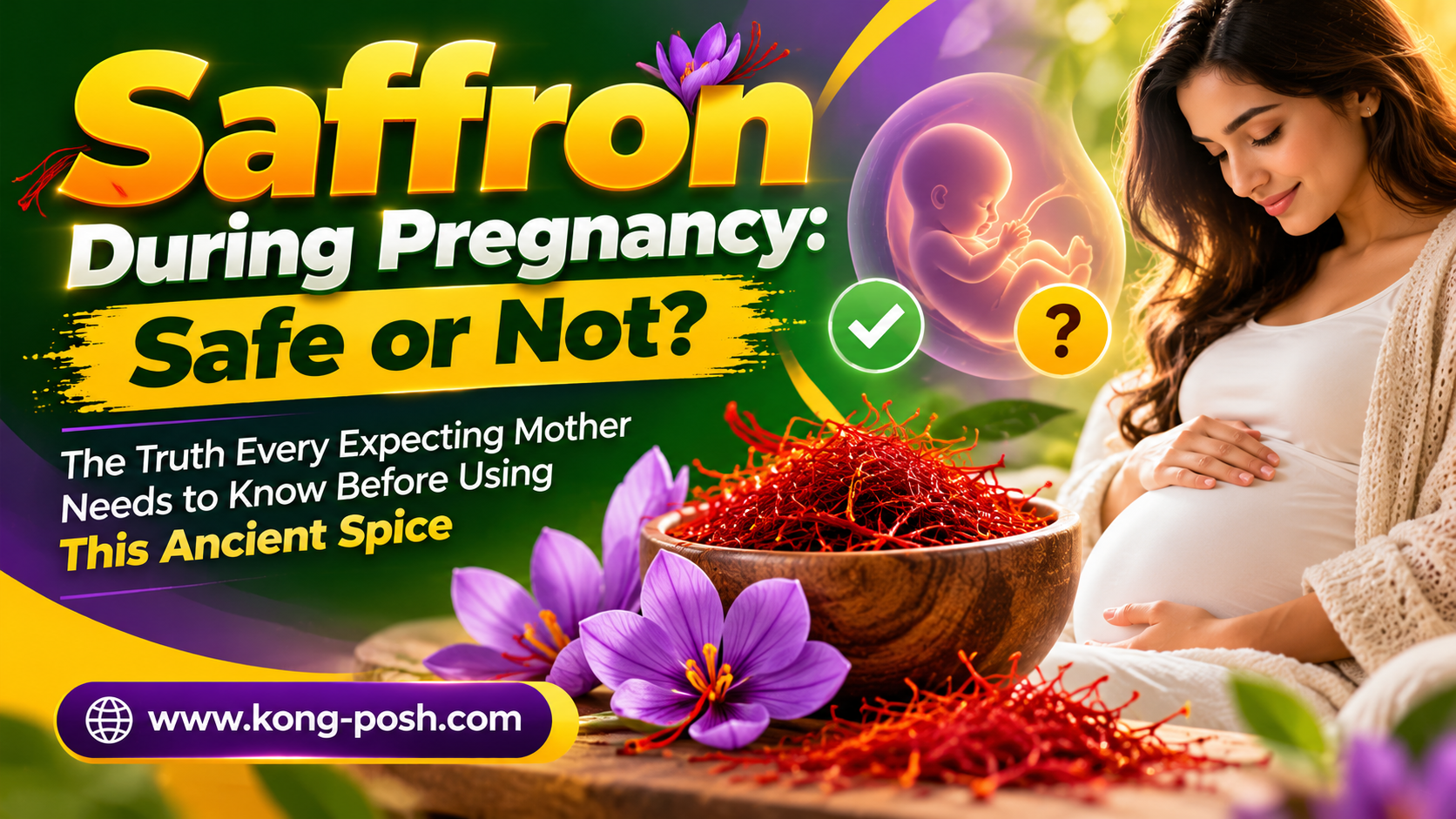
Pregnancy is one of the most sensitive and important phases in a woman’s life. Every food, every supplement, and every natural remedy suddenly becomes a serious decision.
And among all traditional ingredients, saffron often stands out as both powerful and controversial.
Some say it’s beneficial for pregnancy. Others warn against it. And most people are left confused.
So let’s break it down clearly, responsibly, and based on real understanding—not myths.
At Saffron Cottage, where we cultivate the finest Kashmiri saffron through seven generations of farming expertise, we believe in one principle above all: purity must be matched with knowledge.
Because even the purest saffron in the world must be used correctly.
First, the Straight Answer: Is Saffron Safe During Pregnancy?
The honest answer is:
Saffron can be safe during pregnancy in very small, controlled culinary amounts.
But:
High doses or medicinal use without guidance is not recommended.
This distinction is extremely important.
Saffron is not dangerous when used as a spice in food. The risk comes only when it is consumed in large quantities or used incorrectly for “home remedies.”
Why Saffron Is Even Considered During Pregnancy
Saffron has been part of traditional wellness systems for centuries, especially in South Asian and Middle Eastern cultures.
Pregnant women are often advised small amounts in warm milk or food because of its perceived benefits.
Potential Benefits (When Used Correctly)
In controlled culinary doses, saffron is believed to:
- Help with mild mood balance
- Support better sleep quality
- Reduce occasional stress or anxiety
- Improve appetite in some women
- Aid digestion during pregnancy discomfort
However, these effects are mild and not medically guaranteed.
Think of saffron here as a supportive spice, not a treatment.
The Critical Warning: Why Excess Saffron Is Risky
This is where misinformation becomes dangerous.
Saffron contains active compounds like crocin and safranal. In very high doses, these can overstimulate the body.
Possible risks of excessive saffron intake:
- Uterine stimulation
- Increased risk of contractions
- Dizziness or nausea
- Hormonal imbalance effects
- Potential complications in high-risk pregnancies
This is why self-medication with saffron “for glow, delivery, or strength” is not safe.
Natural does not always mean unlimited.
Safe Usage Guidelines (Very Important)
If a doctor approves or if you are using saffron as a food spice:
Safe approach:
- Use only 2–3 strands per day
- Always soak in warm milk or water before consumption
- Use occasionally, not excessively
- Prefer it in food rather than concentrated remedies
Avoid completely:
- Saffron supplements or extracts
- High-dose saffron milk remedies
- Any “pregnancy induction” claims online
- Unverified herbal mixes containing saffron
Why Kashmiri Saffron Quality Matters
Not all saffron is the same.
This is especially important during pregnancy.
Low-quality or adulterated saffron may contain artificial color, chemicals, or contaminants that are unsafe.
At Saffron Cottage, our Kashmiri saffron is:
- Naturally cultivated in Kashmir
- Hand-harvested through traditional methods
- Free from additives or artificial coloring
- Traced through seven generations of farming knowledge
When safety matters, purity is not optional—it is essential.
What Doctors and Modern Science Suggest
Modern medical guidance is consistent:
- Culinary saffron in small amounts is generally considered safe
- Medicinal doses are not recommended during pregnancy without supervision
- Evidence for strong pregnancy-related benefits is still limited
In simple terms:
Saffron is food, not medicine during pregnancy.
Common Myths You Should Ignore
Let’s clear misinformation that spreads online:
Myth 1: Saffron makes babies fairer
No scientific evidence supports this.
Myth 2: More saffron means easier delivery
False and potentially unsafe.
Myth 3: Saffron guarantees a healthy pregnancy
Health depends on overall nutrition, not a single spice.
The Real Truth
Saffron is powerful—but pregnancy is not the time for experimentation.
Used correctly, it can be a gentle supportive spice.
Used incorrectly, it becomes a risk.
Balance is everything.
Final Thought
Pregnancy is not about adding more. It’s about choosing better.
If you choose saffron, choose it with respect, moderation, and purity.
And most importantly, choose knowledge over tradition when they conflict.
Because the safest ingredient is not just what you consume—it’s how you understand it.
Call to Action
If you are looking for authentic, lab-pure Kashmiri saffron, grown responsibly and harvested through generations of expertise, explore Saffron Cottage.
Because when it comes to pregnancy, purity and trust are not luxuries—they are necessities.