
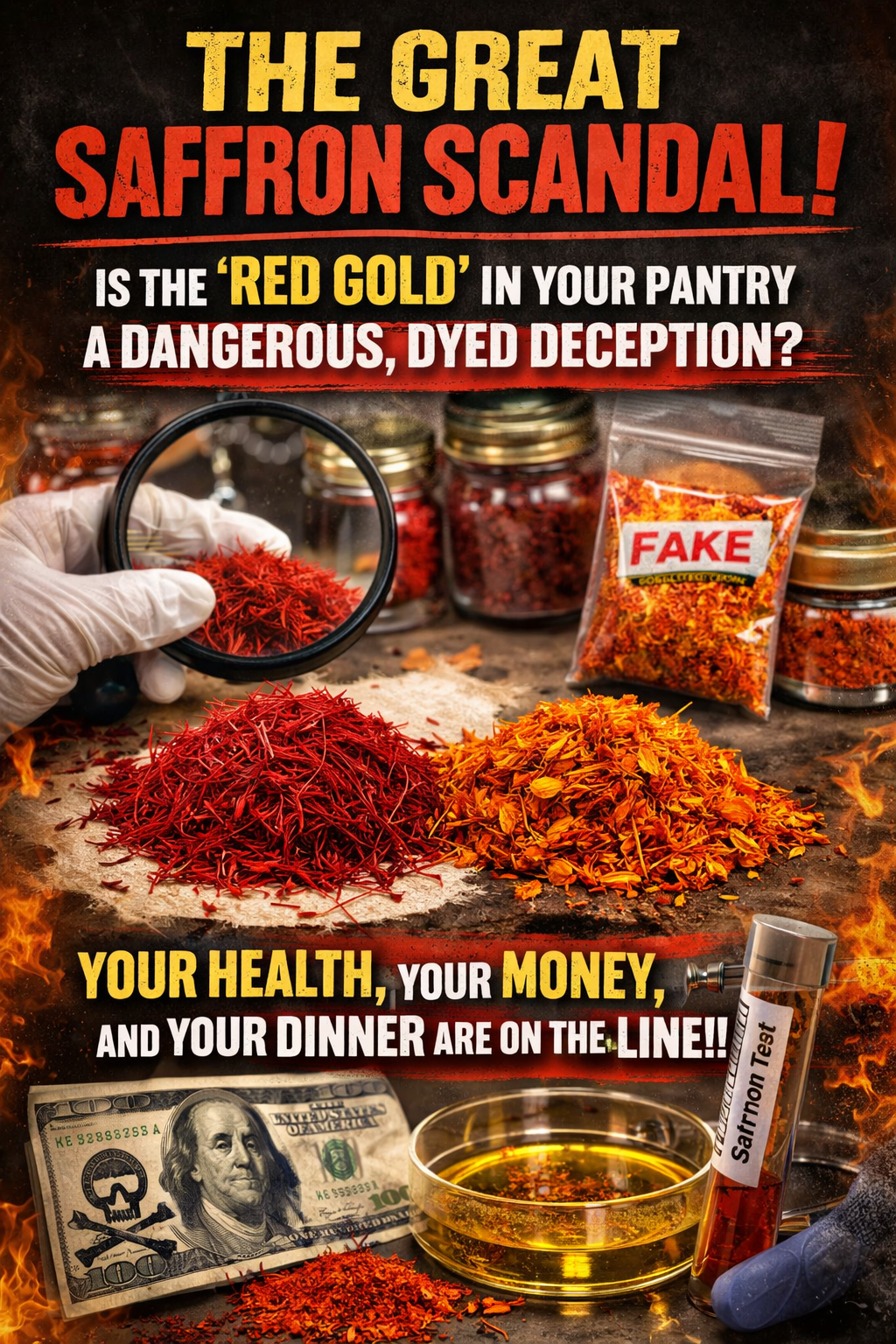
A WAKE-UP CALL TO EVERY CONSCIOUS CONSUMER!
There is a silent, sinister secret lurking in kitchens and supplement cabinets across the globe, preying on the trust of millions. It’s an insidious deception involving one of the world’s most ancient, revered, and expensive spices: Saffron.
For centuries, saffron, often called “Red Gold,” has been synonymous with luxury, vibrant colour, exquisite flavour, and powerful health benefits. It is the crowning glory of paella, the soul of biryani, and a highly sought-after natural remedy. You pay a premium price for those delicate, crimson threads because you believe you are purchasing purity. You believe you are investing in the unstained, sun-dried stigma of the Crocus sativus flower—nature’s concentrated masterpiece.
But we must ask a shocking, vital question that demands your immediate attention and action: Is Your Saffron Really Free from Chemicals, Artificial Ingredients, and Preservatives?
The cold, hard truth is that the global saffron market is a magnet for fraud. The immense value and painstaking labor required to harvest genuine saffron have created a fertile ground for unscrupulous profiteers. They are actively selling you fake, adulterated, and potentially toxic products disguised as the real deal. This is not just a culinary disappointment; it is a threat to your health, a betrayal of your wallet, and an erosion of your well-being.
THE TERRIFYING TOXIC TRUTH BEHIND THE FAKE THREADS
Think for a moment about why you buy saffron. You seek its signature, earthy aroma; its subtle, slightly bitter flavour; and its rich, golden-yellow hue. More importantly, you seek its documented health benefits: the powerful antioxidants, the potential for mood elevation, and its role in cognitive support.
But what happens when the threads you use are not saffron at all?
Counterfeiters are sophisticated, mixing or replacing genuine saffron with cheaper, worthless, and often dangerous substitutes. They are using:
- Dyed Corn Silk, Safflower, or Marigold Petals: These are sprayed with harsh, synthetic chemical dyes to mimic saffron’s colour.
- Shredded Paper, Coconut Fibers, or even Plastic Strands: These are dyed and meticulously cut to look like genuine stigmas.
- Fillers to Add Weight: Sawdust, rice flour, and even sugar or honey (to increase weight and mask the bitter taste of real saffron) are added to defraud you on quantity.
- Dangerous Preservatives and Artificial Colours: The most alarming finding is the presence of industrial, unauthorized synthetic dyes like Tartrazine (E102), Quinoline Yellow (E104), and Sunset Yellow FCF (E110).
This is the URGENT point you must grasp: When you consume fake saffron, you are not simply missing out on the benefits of the real spice—you are actively introducing known toxins and allergens into your body.
A DIRECT ASSAULT ON YOUR HEALTH
The very chemicals used to trick your eye are linked to serious health concerns:
- Allergic Reactions: Synthetic dyes are notorious triggers for allergic responses, skin rashes, and asthma.
- Neurocognitive Risk: Studies have flagged certain artificial colours as being linked to hyperactivity and behavioral disorders in children and potential neurocognitive effects in adults.
- Gastrointestinal Distress: Unknown fillers and low-quality substances can cause stomach problems, nausea, and general digestive discomfort.
Are you willing to gamble your family’s health on a cheap imitation? The danger is real, and the time to act is NOW!
THE POWER IS IN YOUR HANDS: FIVE LIFE-SAVING AUTHENTICITY TESTS
The moment has come to stop hoping and start knowing. You do not need a laboratory to verify your saffron. You need vigilance, common sense, and these simple, actionable home tests. DO NOT BUY SAFFRON POWDER! Only whole, intact threads give you the chance to verify purity.
1. The Cold Water Immersion Test: The Slow Reveal
This is the most crucial test. Real saffron acts slowly; fake saffron betrays itself instantly.
- ACTION: Drop 3-4 saffron threads into a small glass of COLD water. Let them sit for at least 10 to 15 minutes.
- THE PURE RESULT: The water will slowly and gradually turn a beautiful, consistent GOLDEN YELLOW or light amber hue. The threads themselves will retain their deep red color and will not dissolve or fall apart. The colour seeps out from the tips, not instantly from the entire thread.
- THE FAKE FAILURE: The water will immediately bleed a dramatic, dark BLOOD RED or bright orange-red dye. The threads may turn pale, white, or disintegrate into dust or sludge. Immediate, excessive colour release is a massive red flag!
2. The Taste and Smell Test: Bitter or Sweet?
Your senses are your first line of defense.
- ACTION: Smell a small pinch of the threads. Take a single thread and place it on your tongue.
- THE PURE RESULT: The aroma should be distinctively sweet, earthy, and hay-like, but the TASTE must be slightly bitter. This bitterness comes from the powerful compound picrocrocin.
- THE FAKE FAILURE: If the saffron smells weak, chemical, or has a plastic odor, it is fake. Crucially, if it tastes sweet, it has been coated with sugar, honey, or other substances to increase weight and camouflage low quality.
3. The Thread Appearance and Rub Test
Real saffron has a signature physical structure.
- ACTION: Examine the threads closely. After soaking them in water for a few minutes, gently rub the threads between your thumb and forefinger.
- THE PURE RESULT: Genuine threads are trumpet-shaped, slightly flared or bulbous at one end. They are dark red, often with an orange-yellow tip. When rubbed, they should remain intact and not easily crumble.
- THE FAKE FAILURE: Counterfeit threads are often flat, brittle, or uniform without the trumpet shape. When rubbed, they may fall apart into dust, paste, or leave excessive, oily, red stain residue on your fingers.
4. The Baking Soda Test (The Ultimate Indicator of Dye)
This test uses a common household item to expose synthetic coloring.
- ACTION: Mix a teaspoon of baking soda in a small amount of water until dissolved. Add a few saffron threads to this solution.
- THE PURE RESULT: The mixture will turn a rich YELLOW color.
- THE FAKE FAILURE: If the solution turns RED, MAROON, or ORANGE-RED, it strongly suggests the presence of chemical dyes.
DEMAND PURITY: YOUR MANDATE AS A CONSUMER
The deceit in the saffron market thrives on consumer ignorance and hesitation. By choosing to purchase only the highest quality, verified product, you starve the fraudulent supply chain and protect your health.
YOUR ACTION PLAN FOR PURE SAFFRON:
- MANDATE WHOLE THREADS: Never buy saffron powder. It is the easiest form to adulterate and impossible to verify.
- DEMAND ISO CERTIFICATION: Look for brands that adhere to the ISO 3632 standard, the globally recognized benchmark for saffron quality. This certification measures the key quality compounds: Crocin (for colour strength), Picrocrocin (for flavour/bitterness), and Safranal (for aroma). Category I (the highest grade) must meet the most stringent criteria.
- BE WARY OF UNBELIEVABLY LOW PRICES: Saffron is a labor-intensive spice, requiring 150,000 to 200,000 hand-picked flowers for one kilogram of threads. If the price is too good to be true, it IS fake. Do not let a temporary saving cost you your health.
- VERIFY THE SELLER: Only buy from reputable, trusted, and specialized vendors who can provide you with information on the origin and, ideally, third-party lab results.
Stop merely purchasing a spice and start investing in your health. Your dinner deserves the authentic, vibrant magic of true Saffron. Your body deserves the clean, powerful, natural medicine it offers. Do not wait. Go to your pantry right now and put your saffron to the test. If it fails, discard it immediately and commit to only buying verified, pure threads from this day forward.
The time for passive consumption is over. The era of demanding chemical-free, authentic purity begins with your next purchase!